The latest Charities Aid Foundation UK Giving Report shows a worrying shift in the nation’s culture of generosity. While total donations remain relatively high, fewer people are giving than at any point in the past decade. This decline in participation – driven by cost-of-living pressures, changing attitudes, and weaker engagement among younger people – means charitable income is increasingly reliant on a smaller group of committed donors. And now it seems that even this income stream is declining. The result is a more fragile system, where overall giving may appear stable in headline terms but is underpinned by shrinking public involvement and growing long-term risk for charities. And with an increase in the cost of living because of the current crisis in The Gulf, the situation seems likely to get a whole lot worse.
So, against this backdrop, how does Pipal Tree aim to raise the funds we need for our environmental programmes in Nepal? These are the Urban Nature programme in Kathmandu valley, being implemented by social enterprise partner Lily’s Leaves, and the Rural Nature programme in Madhesh Province, south Nepal, which is implemented by NGO partner Mithila Wildlife Trust. That’s a particularly tall order also given that the points of implementation are 5,000 miles away, far from the purview of the British public that makes up most of our donor base.
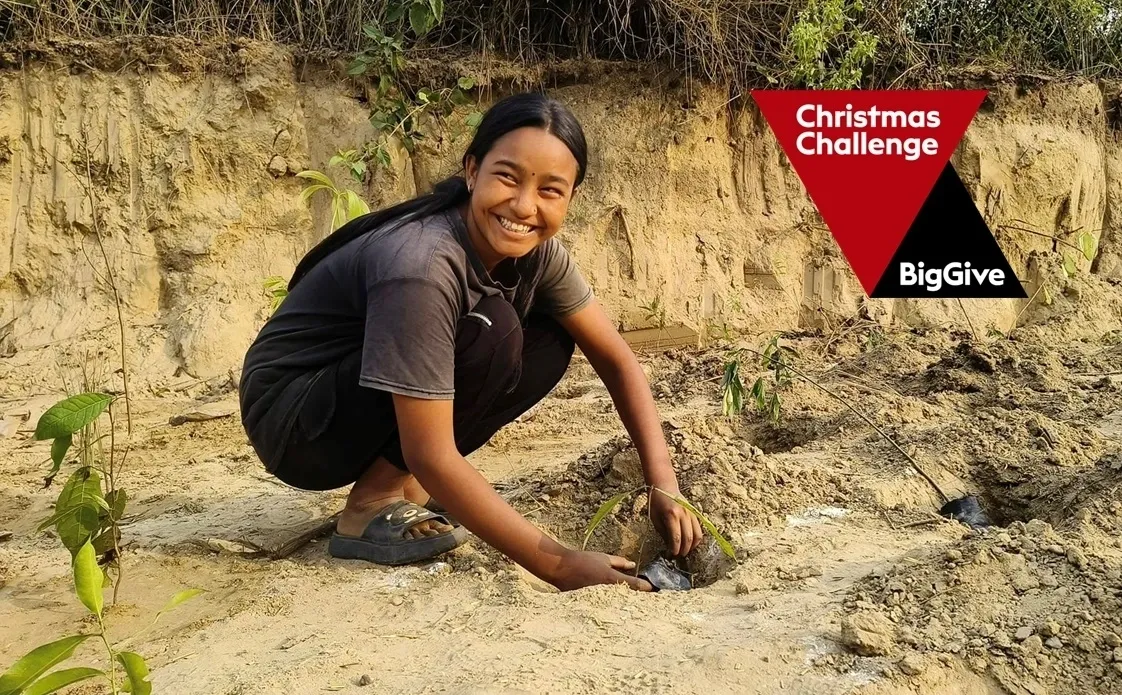
It seems to me that the secret to success lies in highlighting the importance of gifts in Wills (which remains a comparatively cheap but high-impact option) alongside being highly strategic in our regular fundraising. By this I mean combining and channelling very different income streams through the powerful matched funding ‘Big Give’ platform that now accounts for around 70% of Pipal Tree’s annual income. And, as always, aiming to communicate in Big Give campaigns as powerfully as ever in word and image. This involves a tremendous team effort by Pipal Tree’s Trustees and volunteers; two of the latter include a professional graphic designer and a cinematographer whose contributions include donating their time and expertise in Nepal visits and for subsequent follow-up work. And for the forthcoming Big Give ‘Earth Raise’ environmental campaign (that launches on 22nd April) we see the need to continue to emphasise the human factor in our projects rather than these being solely focussed on Nepal’s flora and fauna and the restoration of the natural world.
A case in point is ‘Joe’s Forest’, part of the sixth urban forest that we are currently creating in Kathmandu valley, this one being planted beside the heavily polluted Bagmati River that flows through the centre of the city. This can be an appropriate (but independent) precursor to the multi-actor, Asian Development Bank-led Kathmandu Ecological Urban Renewal (KEUR) programme that, with the support of the new and enlightened government in Nepal, is likely to launch later in the year. ‘Joe’s Forest’ will rest beside forest sections planted in memory of my sister-in-law, Beth Holmes, who passed away in January and of Sir Alec Reed, Founder of The Reed Foundation and The Big Give, who passed away in December.
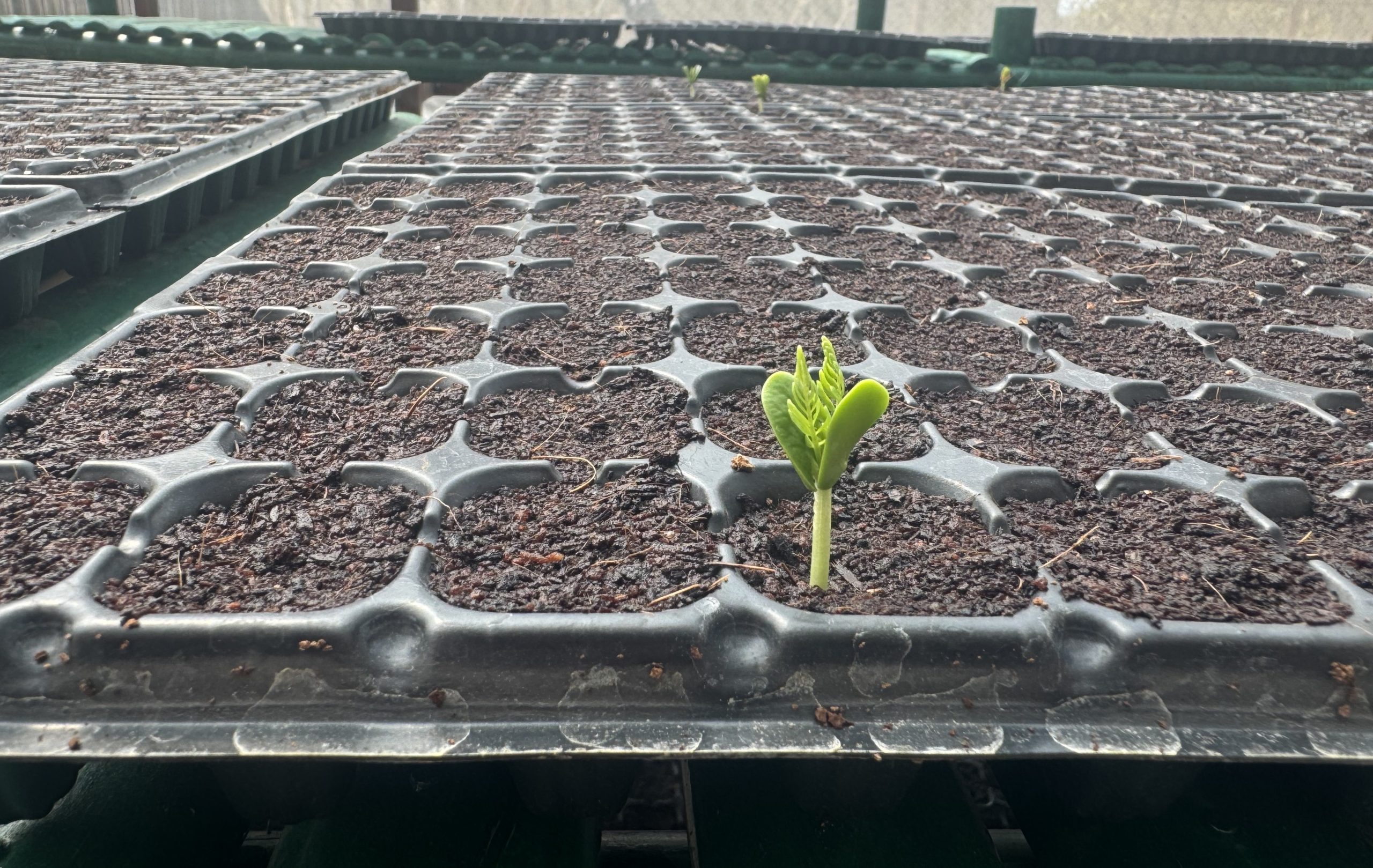
One of our rapid-growth ‘Miyawaki Method’ urban forests costs approximately £10 per square metre to create – this to cover clearing rubbish and rubble from public waste ground, fencing, deep excavation and compost enrichment of the soil, cultivation and dense planting of native saplings with mulching and subsequent maintenance and irrigation. The latter phase lasts for three years until the forest reaches maturity – this being achieved ten times faster than if a forest were planted conventionally.
The Urban Nature forest fundraising sources for Earth Raise include matching pledges collected beforehand from:
- Corporates – Eleos Compliance have made a matching pledge of £6,000
- UK grant-making Trusts – five Trusts have pledged a total of £42,200
- Gifts from major donors, where the minimum pledge is £100 and the maximum received has been £5,000
- One Rotary and one Soroptimist club.
These pledges serve to match gifts made, primarily by the general public, during the online phase of the campaign with all donations automatically doubling in value at the point of donation. Of course, the converse applies, in that pledges are effectively matched by the online donations that they incentivise.
Within the public donations elements are embedded the proceeds of two charity challenges. The first of these is The Three Peaks Challenge that will run from 2nd-3rd May when an eight-person team of intrepid climbers will aim to climb the three highest mountains in Scotland, England and Wales (Ben Nevis, Scafell Pike and Snowdon/Yr Wyddfa) within 24 hours. Their fundraising target is to raise £10,000 towards ‘Joe’s Forest’ that can double in value through The Big Give. They are doing this in memory of Joe Greenslade, a young man who tragically took his own life in October last year, with the team made up of Joe’s father, Matthew, and some of his close friends. The appeal is particularly relevant as Joe spent some of his childhood in Kathmandu along with his sister Ella and parents, Matthew and Sarah (which is where I knew the family during the time that I too lived in Nepal). The family knows from first-hand experience the need for improvement to the environment in Kathmandu valley, which has one of the worst air qualities of any world city. See this film – which also explains why such ‘in memoriam’ initiatives are also important to me on a personal level:
The team’s fundraising is already underway, with sponsorship funds being donated into a holding account of our sister charity Our Sansar (which collaborates with us on a different child-related project within Nepal), ready to be donated in their entirety when the online campaign starts at noon on 22nd April. As you can see from the link below, they’re off to a very strong start!
The second challenge is my own. With my turning 66 earlier this month, I decided that I would ‘celebrate’ through running six European marathons as part of my ‘Year of the Sixes’ challenge. I have already completed Seville in February and Barcelona in March, with the next two being in Milan (12th April) and London (26th April). I have yet to decide the venues for the final two marathons. But my sponsorship for the next two will also be held at Our Sansar on the same basis as The Three Peaks Challenge. Here is my sponsorship link:
The overall Earth Raise campaign link can be found here:
https://pipaltree.enthuse.com/cp/517db/fundraiser#!/
And, at the time of writing, we still need to identify £5,707 in matching pledges that will double up all donations made online or in sponsorship to the challenges. Here is the link for that, which takes only a minute to complete. Nothing is payable until after the online campaigns end in May.
Some strategy! As ever, Pipal Tree and its national and international partners are simply the best…