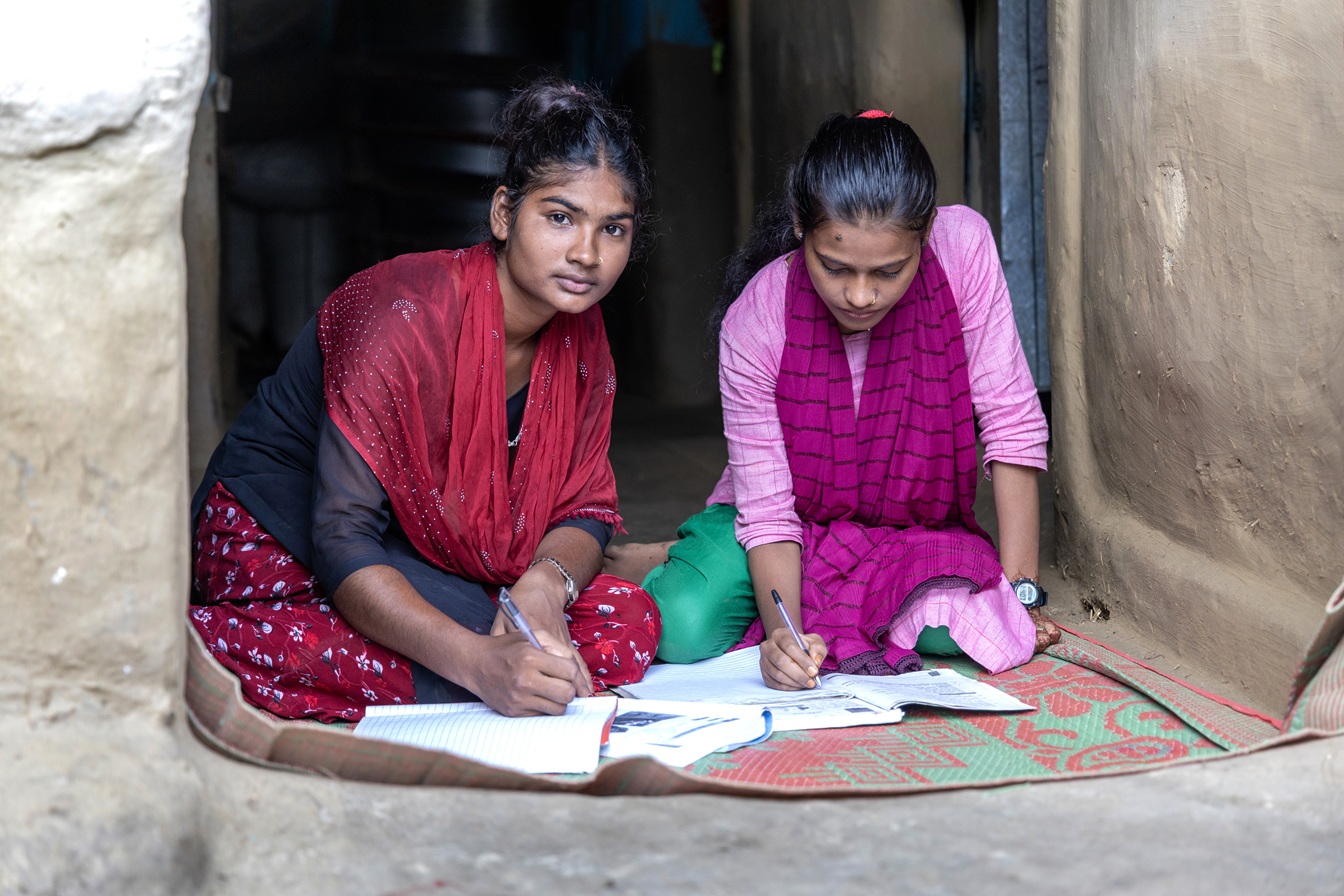
Last week, Dev Narayan Mandal invited 16 young people from the local Dalit community in southern Nepal to a meeting at the office of our partner organisation, the Mithila Wildlife Trust (MWT). These young people are among the 33 students currently receiving bursaries from Pipal Tree, through MWT, enabling them to complete the equivalent of sixth-form education.
Dev had some remarkable news to share. This autumn, the programme will take an important new step forward. For the first time, MWT, working closely with colleges, students and their families, will select three bursary recipients to receive funding for tuition fees and other costs associated with studying for a Bachelor’s degree. They will be able to pursue university courses of their choice.
For these students, receiving support to continue their education beyond school was already something many had scarcely dared to hope for. The prospect of attending university is beyond anything they imagined possible. We are delighted to be able to recognise talent, determination and hard work in this way.
The roots of this achievement stretch back to 2013, when Dev, the founder of MWT, returned to his home community in Dhanushadham, Dhanusha District, after ten years working in Delhi. Determined to improve opportunities for Dalit children, he established the first Community Learning Centre (CLC). Beginning as an open-air learning space serving just 18 children, it has since grown into an impressive network of educational support centres helping hundreds of children who might otherwise struggle to succeed – or remain – at school.
Today, MWT directly operates eight CLCs, while a further seventeen centres have been established independently through a growing volunteer network inspired by the model. Together, these centres support more than 1,300 children, with Pipal Tree and MWT providing all or part of the funding. Children attend government schools during the day and receive additional tuition and learning support before and after school, helping them overcome the barriers created by poverty, discrimination and limited educational opportunities.
One of the programme’s greatest strengths is that it is community-led. Older students, including bursary recipients, serve as tutors and role models for younger children from the same communities. In return for their bursaries, each student supports around 50 younger learners. They do far more than help with homework – they demonstrate what education can achieve and inspire younger children to believe in their own potential.
We are therefore especially pleased that, from this autumn, the number of bursary students will increase from 33 to 51. The three new undergraduates will, of course, also play their part in strengthening opportunities for the next generation of children and young people in their communities.
This creates a powerful cycle of change. Younger children receive academic support through the CLCs. Successful students progress into the bursary programme. Outstanding students move on to university and, ultimately, become graduates who can help strengthen the very system that supported them. Our vision is to help create one or two generations of educated young people within these highly marginalised communities. We believe that sustained access to education can transform lives, expand opportunities and enable families to build more secure and dignified futures.
This next phase of the programme will be funded through our forthcoming Big Give campaign, which launches on 21 July. Through the campaign, we aim to raise £100,000 to support this ambitious expansion. Donations made online during the campaign will automatically be doubled in value.
To make this possible, we must first secure £50,000 in matching pledges before the campaign begins. We are delighted that two generous supporters have already pledged a combined £10,000, but we still need help to secure the remaining balance.
If you are able to make a pledge (the minimum amount is £100), please visit this link and register your future gift. Nothing will be payable until after the online campaign closes on 4 August.
And who knows? If we exceed our target, perhaps we could fund not just three university places, but four. Or even five….