I am delighted to announce that the Guernsey Overseas Aid & Development Commission (GOADC) has awarded Pipal Tree a grant of £70,000 towards an £80,000 project that will launch on 15th July this year.
The remaining £10,000 will come from our Big Give Earth Raise campaign, which took place in April. During that appeal we spoke about our ambition to pilot new compost ingredients that, if successful, could be adopted more widely across Nepal. Thanks to incredible supporter generosity, the campaign raised an impressive £105,326.
While the campaign has officially ended, we continue working towards our original £171,500 campaign target through grant applications, corporate partnerships and support from individual donors. This latest award is a powerful example of how Big Give income can help unlock much larger grants and significantly increase the impact of every donation received.
Circular Sanitation and Soil Enrichment in Nepal’s Terai
The new project, entitled Circular Sanitation and Soil Enrichment in Nepal’s Terai, tackles two significant environmental and public health challenges facing communities in southern Nepal.
As highlighted in a previous blog post, a hidden sanitation crisis affects both people and the environment across the Terai. Most households rely on septic tanks rather than sewer systems. Every day, thousands of litres of waste are removed from those tanks, yet in many areas there are no safe treatment facilities. Instead, faecal sludge is often dumped on open land or into rivers and waterways, contaminating the environment and creating serious public health risks.
At the same time, local farmers face declining soil fertility, rising fertiliser prices and unreliable supplies, making it increasingly difficult to maintain crop yields and support their families.
Our project addresses both problems through a single, practical solution.
Working with our local partner, Mithila Wildlife Trust, we will establish a low-cost faecal sludge treatment and composting facility in Dhanusha District. The facility will safely process approximately 900,000 litres of septic waste each year, transforming what is currently a pollution problem into a valuable agricultural resource.
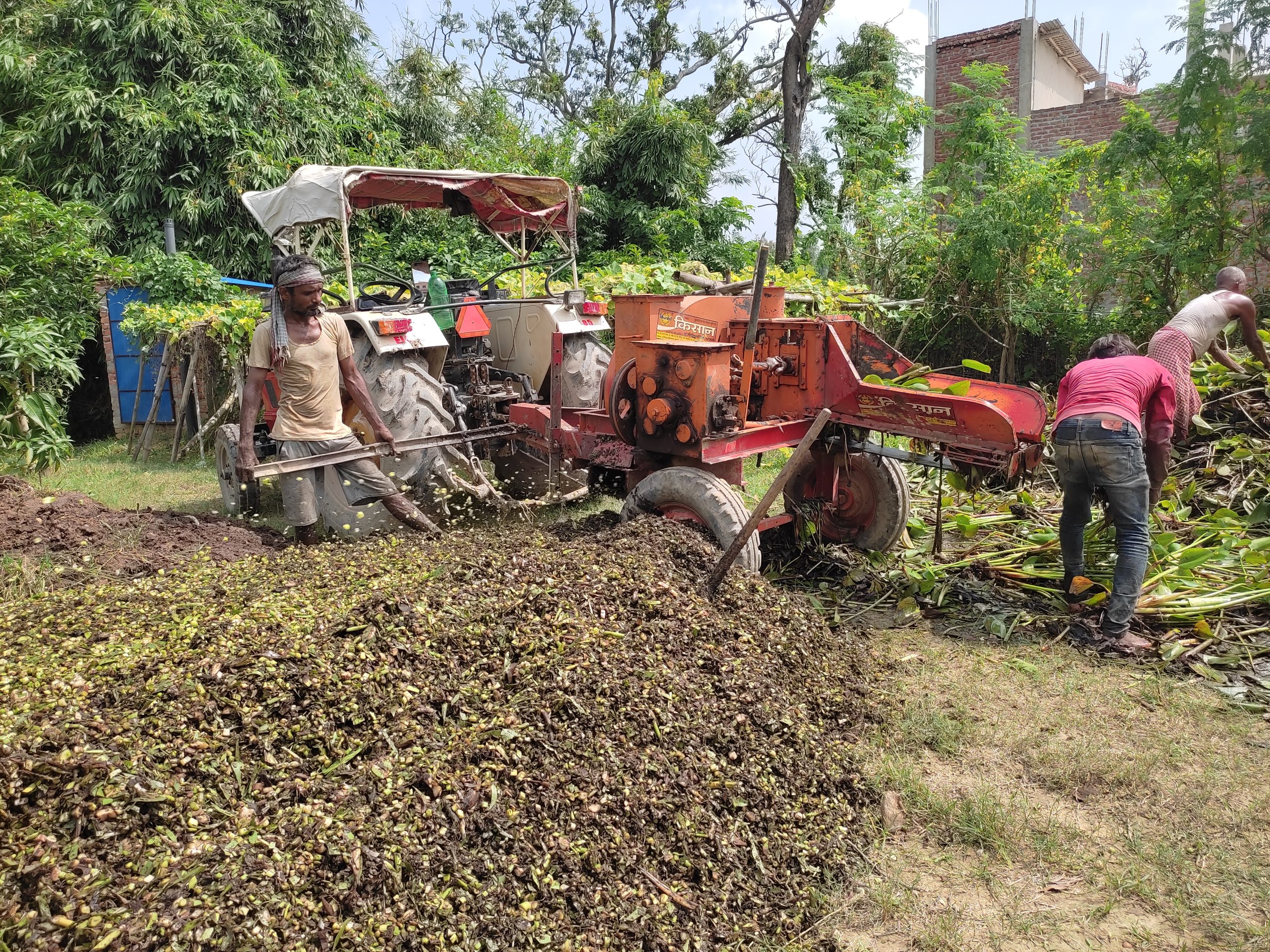
The treatment process will combine safely dried sludge with organic materials, including invasive water hyacinth harvested from local waterways (pictured above being shredded for compost production). Through solar drying and controlled composting, these materials will be converted into nutrient-rich eco-compost that can be used to improve soil fertility and agricultural productivity.
This is the circular economy in action as we turn waste into a resource while improving public health, environmental quality and local livelihoods.
Supporting Marginalised Communities
The project will work closely with members of the Halkhor community, a historically marginalised caste group that has long been associated with sanitation work. People from this community currently earn a living collecting and transporting sludge under unsafe and often undignified conditions, with little protection from the associated health risks. There is absolutely no use of personal protection clothing or even gloves.
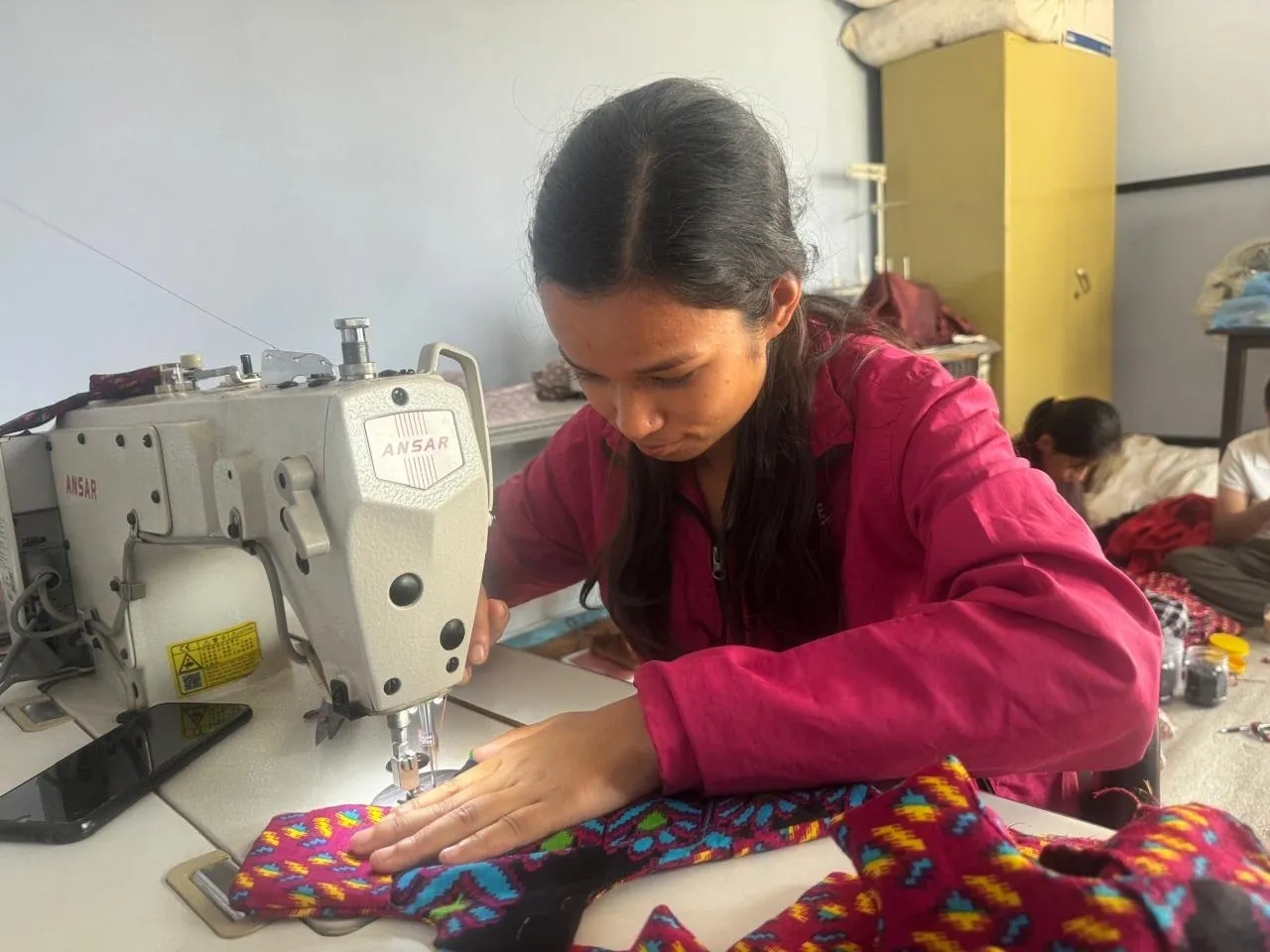
Through this project, 50 people from the Halkhor community will receive training in safe sludge management and compost production. The facility will create safer, more dignified employment opportunities while reducing exposure to hazardous working conditions. We are also committed to increasing opportunities for women through roles in compost production, packaging and distribution.
Benefits Beyond the Facility
The impact of the project extends far beyond those directly employed.
By diverting waste away from open dumping sites and waterways, the project will reduce environmental contamination and help lower the risk of waterborne diseases. Approximately 2,800 households currently served by local desludging operators are expected to benefit from cleaner environments and improved sanitation services.
At the same time, local farmers will gain access to affordable organic compost that improves soil structure and fertility while reducing dependence on imported chemical fertilisers. These fertilisers are expensive, energy-intensive to manufacture and transport, and can contribute to long-term soil degradation when used excessively. Locally produced organic compost offers a far more sustainable alternative for both farmers and the wider environment.
Built to Last
One of the most exciting aspects of the project is its long-term sustainability.
Rather than depending on ongoing external support, the facility is designed to operate as a self-sustaining social enterprise. Income will come from two sources:
- Fees paid by desludging operators for safe treatment and disposal.
- Sales of compost to farmers, nurseries and agricultural businesses.
Together, these revenue streams are expected to cover the facility’s operating costs, allowing it to continue delivering benefits long after the initial grant funding has been spent.
Contributing to Global Goals
The project contributes directly to several United Nations Sustainable Development Goals:
SDG 6 – Clean Water and Sanitation
Providing safe treatment of faecal sludge and reducing environmental contamination.
SDG 2 – Zero Hunger
Improving soil fertility and supporting agricultural productivity.
SDG 8 – Decent Work and Economic Growth
Creating safer and more sustainable employment opportunities for marginalised sanitation workers.
SDG 12 – Responsible Consumption and Production
Transforming waste materials into valuable resources.
More Than Trees
This project also illustrates something important about Pipal Tree’s wider environmental programme. While we are best known for planting trees, restoring forests and protecting wildlife, our work is about much more than conservation and restoration of biodiversity alone. We aim to help communities live healthier, safer and more sustainable lives while addressing environmental challenges that are increasingly being intensified by Climate Change. Sanitation, soil health, livelihoods, biodiversity and climate resilience are all interconnected. Lasting environmental restoration cannot be achieved without improving people’s lives at the same time.
Two Important Take-aways
There are two particularly important take-aways from this success:
Firstly, strategic use of campaigns such as the Big Give can dramatically increase the impact of even modest donations. Not only are gifts doubled during the campaign itself, but the funds raised can also be used to leverage much larger grants from institutional funders.
Secondly, our environmental programme is not simply about planting trees. It is about creating practical solutions that improve human wellbeing while restoring the natural systems upon which communities depend.
This project rests perfectly with our stated Mission:
‘To restore Nepal’s degraded environment so that wildlife and local communities can thrive together. At the same time, we aim to create healthier, safer lives for the poorest people and help them realise their full potential.’