A new conservation programme for 2027
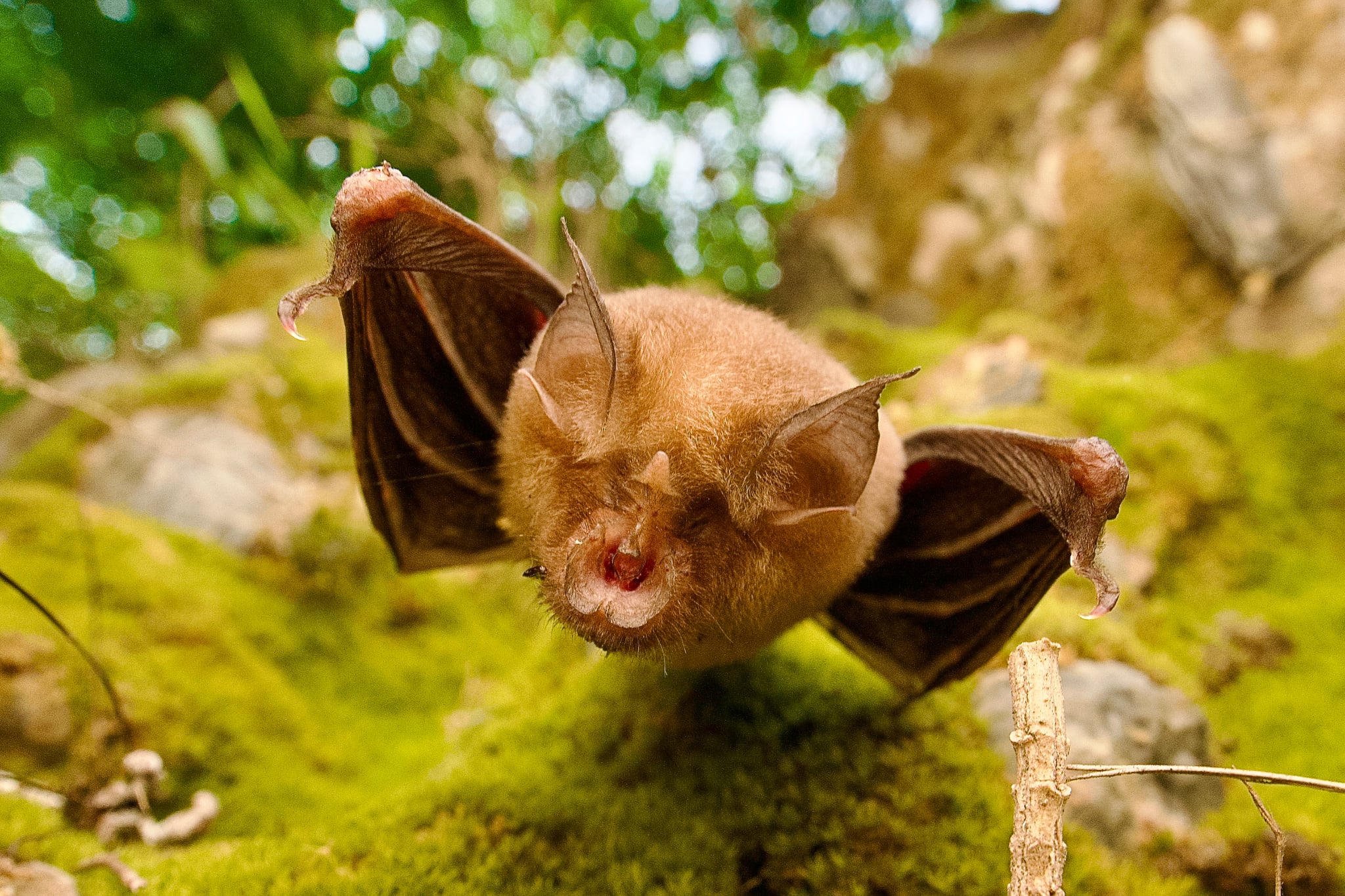
Just like snakes, bats may not be everyone’s favourite animals, but they play a vital role in keeping our natural environment healthy. Now Pipal Tree and our Nepalese partner, Mithila Wildlife Trust, are hoping to launch an exciting new programme to understand and protect these remarkable creatures.
When we think about wildlife conservation in Nepal, we tend to picture tigers, elephants, rhinos and other large mammals. But some of the country’s most important wildlife is much smaller, less conspicuous and, in some cases, rather misunderstood.
Take bats, for example.
Nepal is home to an astonishing 58 recorded species of bats, compared with just 18 in the UK. Yet remarkably little is known about their distribution, numbers and conservation needs, particularly on the southern plains of Nepal, known as the Terai.
We would like to do something about that.
Why bats matter
Bats are among nature’s unsung heroes. Insect-eating species consume large quantities of insects, including agricultural pests, potentially benefiting farmers and reducing the need for chemical pesticides. Other species help pollinate plants and disperse seeds, contributing to the regeneration of forests and the health of entire ecosystems.
Yet bats are often feared or misunderstood. They may be regarded as unwelcome visitors when they roost in buildings, and concerns about disease can encourage people to drive them away or even kill them.
As with so much wildlife, the challenge is not simply to protect bats from people, but to help people understand how they can live safely alongside bats.
And that is something we already know quite a lot about.
Learning from our snake conservation programme
For several years, our partner Mithila Wildlife Trust (MWT) has been pioneering a snake conservation programme across Madhesh Province.
Snakes, like bats, are often feared. Some are venomous and present a genuine danger to people, particularly in rural communities where snakebites can be fatal.
MWT’s approach has been to recognise the interests of both people and wildlife. Through community education, snake rescue training, a public helpline and initiatives to reduce snakebite deaths, the team is demonstrating that it is possible to protect snakes while also protecting the people who encounter them.
Rather than automatically killing a snake discovered in a home or garden, residents can seek advice and, where necessary, assistance from trained rescuers.
The underlying principle is simple: people and wildlife should be able to coexist safely, even when they share the same space.
This philosophy is central to our work in the Dhanushadham Wildlife Corridor, where we are restoring forests, wetlands and other habitats while working with local farmers and communities to reduce human–wildlife conflict.
We believe bats deserve the same thoughtful approach.
An exciting scientific discovery
Our plans have been given additional impetus by a major scientific study published in the Nepalese Journal of Zoology in 2026.
The researchers documented 15 bat species in Madhesh Province, including six species recorded in the province for the first time.
Among their discoveries was Mandelli’s mouse-eared myotis (Myotis sicarius), a globally Vulnerable bat species previously thought to occupy higher elevations in Nepal. Its discovery in the southern lowlands suggests that its distribution may be much wider than previously understood.
Importantly, one of the study’s co-authors was none other than Dev Narayan Mandal, founder of Mithila Wildlife Trust, bringing valuable local expertise to our proposed programme.
The findings underline just how much remains to be discovered. If scientists are still identifying previously unrecorded bat species in this region, what else might be living in its forests, wetlands, farms and villages?
Our plans for 2027
Subject to securing funding, we hope to begin a 12-month bat conservation research programme in Dhanusha District in spring 2027, with MWT leading the work on the ground.
Our first priority will be to establish a scientific baseline – finding out which species are present, where they live, where they feed and roost, and what threats they face.
Working with a Nepalese bat specialist, the team plans to investigate approximately 12 locations representing different habitats, including forests, rivers, wetlands, farmland and human settlements.
Some of the research will take place in and around the Dhanushadham Wildlife Corridor, where we are already restoring a 12-kilometre landscape connecting the Chure Hills with the Dhanushadham Forest Conservation Area.
We are particularly interested in understanding how bats are using these restored habitats, and how future reforestation, wetland restoration and agroforestry might benefit them.
Specialist ultrasonic detectors will allow researchers to record the high-frequency calls that bats use to navigate and hunt. These recordings, together with observations and roost surveys, will help the team identify species and understand their activity throughout the changing seasons.
But this will be much more than a scientific exercise.
We also intend to involve local communities, farmers and schools, explaining the ecological importance of bats, dispelling misconceptions and encouraging safe coexistence.
Could we establish a bat helpline?
In October, Dev and I visited the Bat Conservation Trust in London, where we learned about its remarkable work protecting bats in Britain.
One particularly interesting initiative is its long-established public helpline, which provides advice to people who encounter bats, including those concerned about bats roosting in buildings.
It struck us that MWT already operates something very similar for snakes in Nepal.
Could this service eventually be extended to bats?
Imagine a householder discovering a colony of bats in their roof, or a builder encountering bats during renovation work. Instead of destroying the roost, they could seek specialist advice about how to respond safely and protect the animals.
There are, of course, legitimate public health considerations. Bats should never be handled without appropriate expertise, and, with the risk of rabies, bites or scratches require prompt medical assessment. But an informed, practical approach can protect both people and bats.
This is a longer-term ambition, rather than an immediate part of the proposed survey, but it illustrates where our thinking is heading.
Starting small, thinking big
We have deliberately designed this as a modest, locally led programme with a budget of £20,000.
That would cover the scientific expertise, field researchers, specialist equipment, community engagement and project oversight needed to deliver a credible baseline survey.
Once completed, the findings should help us develop a longer-term conservation programme in Dhanusha, identifying important roosting sites and feeding habitats that need protection.
And Dhanusha could be just the beginning.
Madhesh Province comprises eight districts. By developing the scientific skills, equipment and survey methods within MWT, we hope eventually to extend this research across the other seven districts, building a much fuller picture of bat conservation needs throughout southern Nepal.
At present, however, the programme remains an ambition. We have yet to secure the funding needed to launch it.
Making room for all of us
There is a wider message behind this initiative.
Our wildlife conservation work in Nepal is not about creating isolated sanctuaries from which people must be excluded. Quite the opposite. Much of our work takes place in landscapes where people farm, work, raise families and depend upon the natural environment for their livelihoods.
In the Dhanushadham Wildlife Corridor, we are demonstrating that forests can be restored, biodiversity can recover and wildlife can flourish alongside thriving communities.
Our snake conservation programme has shown how education and practical intervention can help overcome fear and reduce conflict.
We now want to apply that same philosophy to bats.
After all, conserving nature isn’t simply about protecting the animals we admire. It is also about making room for the creatures we might not understand, but which are every bit as important to a healthy, functioning ecosystem.
If we can help people and bats live happily alongside one another, we will have taken another small but important step towards our vision of a Nepal where wildlife and communities thrive together.
We are currently seeking funding partners to help us launch this £20,000 programme in 2027. If you or your organisation would be interested in supporting this pioneering initiative, please get in touch with me – philip@pipaltree.org.uk.