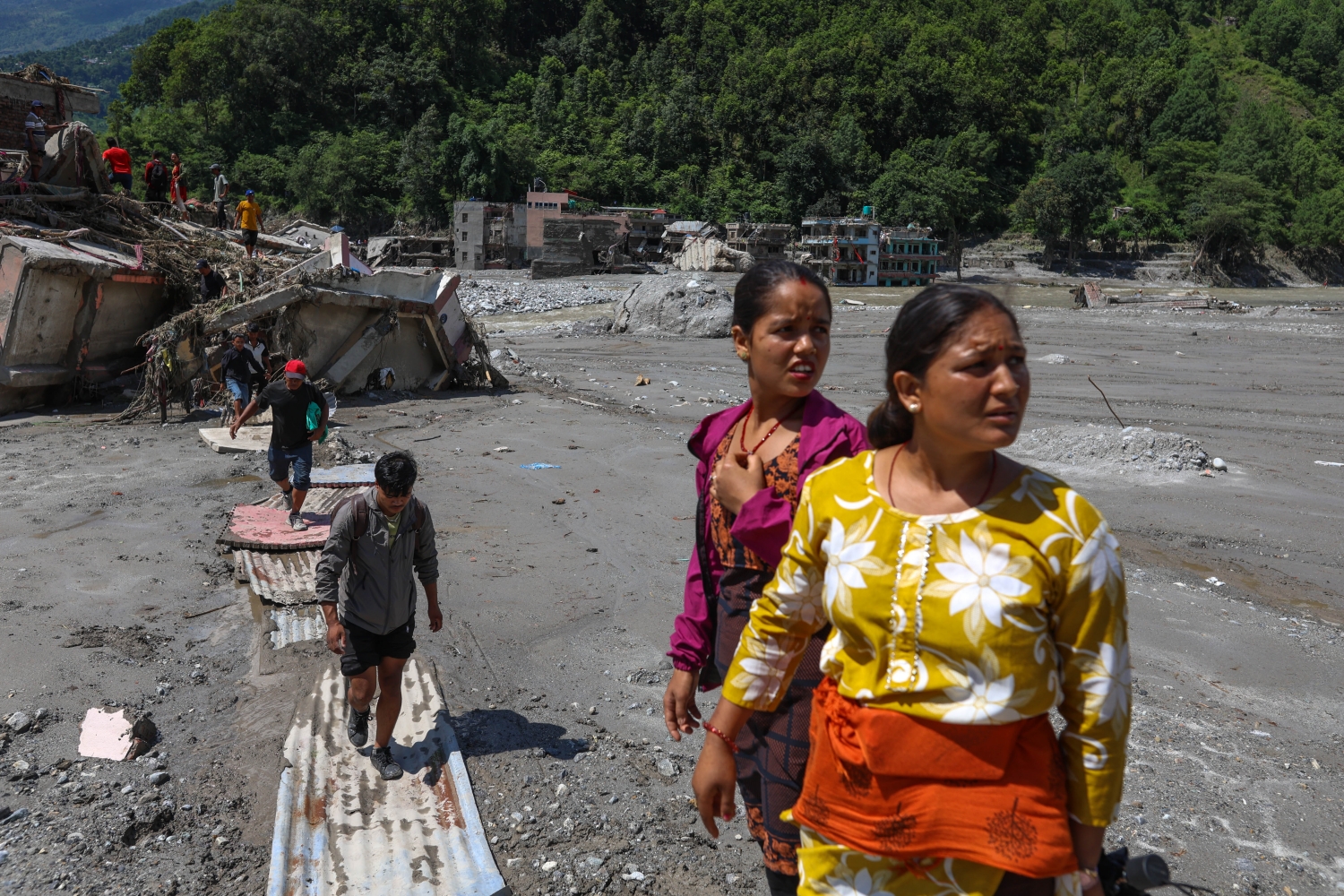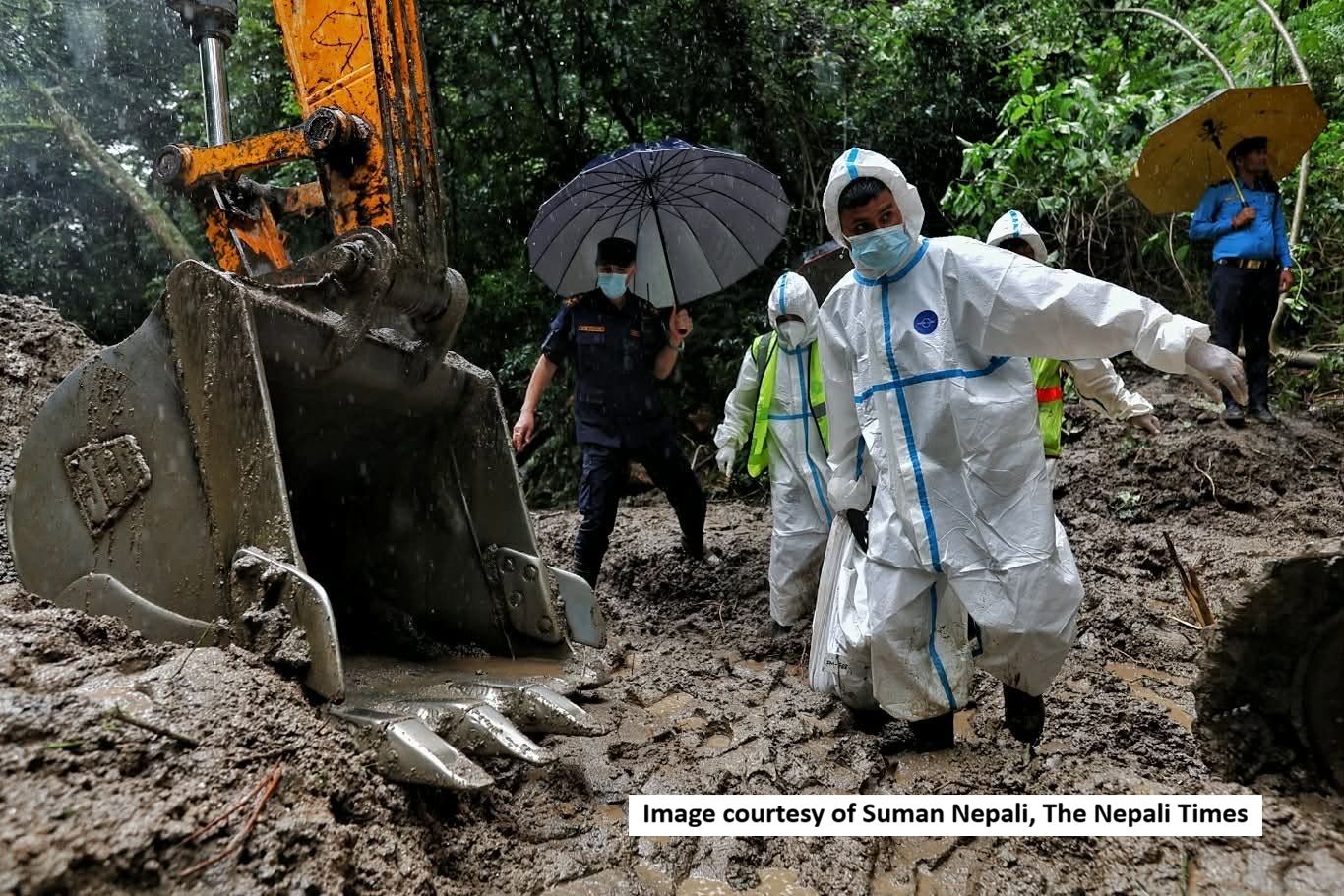
The authorities in Nepal continue to manage the response to last week’s catastrophic landslide and flash flood as well as could reasonably be expected in the most challenging circumstances. Tragically, the scale of the loss is such that unidentified bodies are having to be buried temporarily in mass graves. DNA samples are being collected in the hope that identification will be possible later, enabling bereaved families to conduct the funeral rites that are so important to them.
Scenes such as the one pictured above provide a stark and poignant indication of the human cost. However, a Rapid Situation Analysis produced jointly by the Youth Alliance for Environment, the Himalayan Cryosphere, Climate and Disaster Research Center at Kathmandu University, and the Society for Conservation Biology Nepal reveals the much wider non-economic consequences.
The report recorded that, by 29 August, 626 people had died, 2,426 remained unaccounted for and approximately 93,000 people had been affected. Behind those figures are families who have lost parents, children and principal income earners—and communities whose lives have been changed permanently. Some settlements along the river corridor had already been rebuilt following the 2015 earthquakes, only to be displaced again. One community of approximately 250 households was reportedly swept away in its entirety. Homes, places of worship, community meeting spaces and sites associated with local traditions have been damaged or destroyed, weakening people’s sense of identity, belonging and security.
Children have been especially badly affected. The report states that 18 schools were destroyed and a further 20 damaged, interrupting the education of at least 10,000 children. Many of these children are also coping with the loss of their homes, relatives and communities. Survivors may face profound grief, fear and trauma for years, with heavy rain, rising rivers and weather warnings capable of triggering continuing anxiety and post-traumatic stress.
The environmental consequences may also be immense. Riverbank vegetation, wetlands, grasslands and aquatic habitats have been severely disturbed. Species including the endangered Golden Mahseer and vulnerable Snow Trout may have suffered catastrophic local losses. The destruction of vegetation and destabilisation of riverbanks could also increase the danger of further erosion and landslides, while damaging the natural resources upon which local livelihoods depend.
Against this heart-breaking backdrop, there is an understandable desire among aid organisations to put ‘boots on the ground’ and deliver supplies as quickly as possible. Experience – including my own involvement in relief work in affected Districts following Nepal’s 2015 earthquakes – has taught me that this is not always the most helpful response. Indeed, if it is poorly coordinated, it can sometimes cause harm.
Outside organisations may send what they believe survivors need without first establishing what is actually required. The result can be inappropriate supplies, duplication, waste and additional pressure on already strained transport and distribution systems. An influx of well-intentioned relief workers and vehicles can also obstruct the essential work being undertaken by the district authorities, Nepal Army and police.
This does not mean that we should wait before responding. It means that we must act immediately to mobilise funds – but deploy them carefully, on the basis of verified needs and in coordination with the responsible authorities. Pipal Tree has therefore established a Children’s Emergency Relief Fund. Its purpose is not to duplicate the general emergency response, but to provide sustained assistance to children who have lost one or both parents, or who have otherwise been left without adequate parental care.
Wherever possible, we will support children to remain with extended family members and within their own communities. We recognise that some children may require temporary residential care while safe, appropriate family or community arrangements are established, and we know of excellent facilities capable of providing that essential safety net.
Our immediate priority is to conduct a thorough needs assessment in partnership with the District Child Welfare Committees, Nepal’s Social Welfare Council and our network of project partners. This will help ensure that every precious pound is directed where it can make the greatest and most lasting difference.
Lily Katuwal KC, founder of our social-enterprise partner Lily’s Leaves, has already held an initial meeting with the Social Welfare Council. Lily’s Leaves will now appoint two field staff, with immediate effect, to work as social workers and liaison officers in the affected region. Their role will be to identify vulnerable children, coordinate with the relevant authorities and help us develop carefully targeted packages of support.
In the meantime, you can contribute to the Children’s Emergency Relief Fund with confidence using the button below. Your donation will automatically be doubled through the Big Give. We are continuing to seek additional matching pledges so that we can maintain this extraordinary momentum. Ultimately, our ambition is to raise £1 million, including through grants and gifts in Wills – enabling us to provide the sustained, child-centred response that a tragedy of this scale demands, long after the immediate emergency has disappeared from the headlines.