Urban reforestation isn’t just about restoring biodiversity, cooling and cleaning the city air. It also should be an integral part of urban planning, making cities pleasanter places to be and to the benefit of everyone’s mental health. We aim to contribute in this way too, so, we’re very pleased to have the opportunity to showcase our Miyawaki rapid-growth reforestation method at Pulchowk Engineering Campus, Lalitpur, which lies within the Kathmandu valley conurbation.
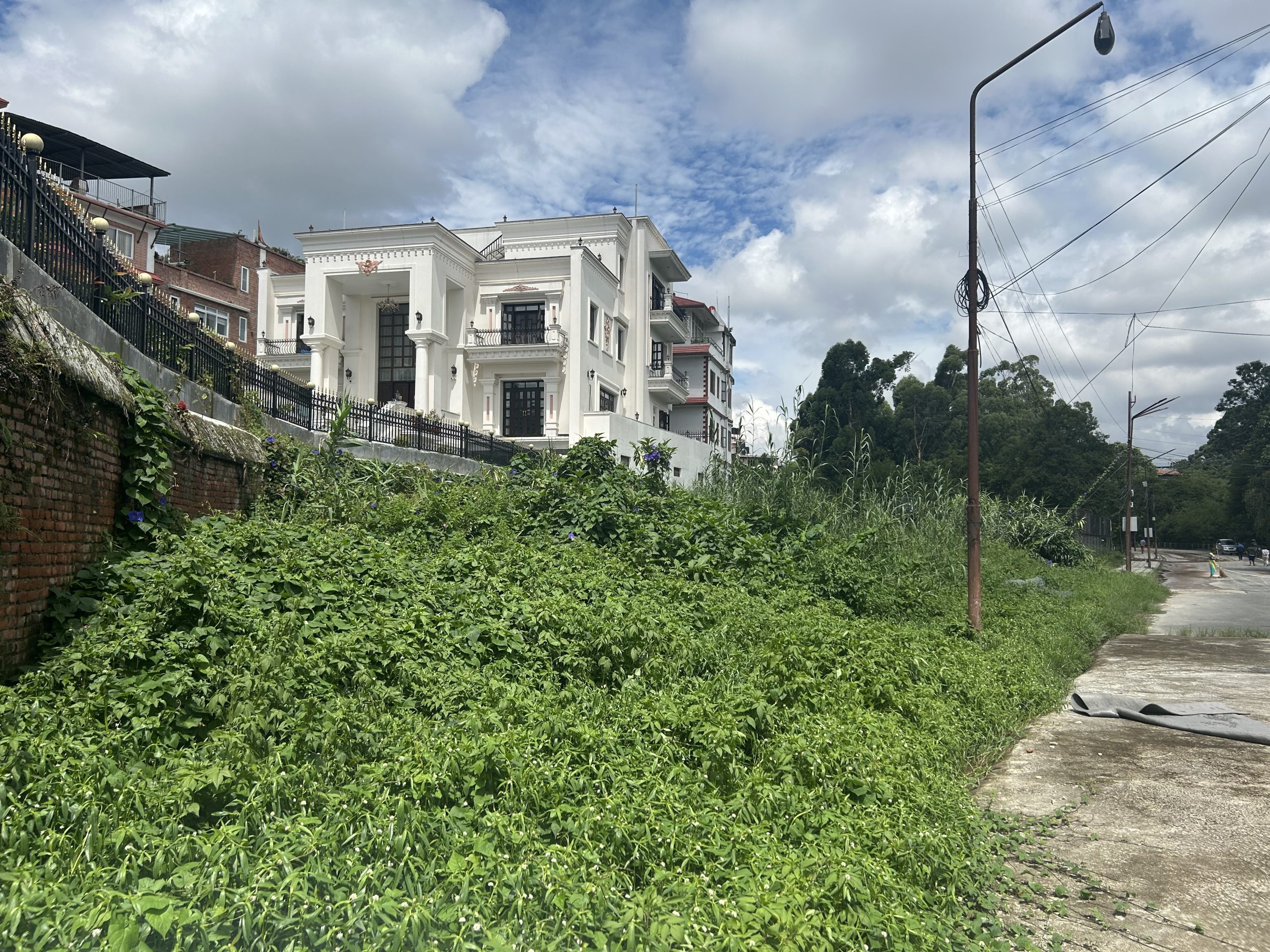
Pulchowk Campus, part of Tribhuvan University, educates more than 3,000 of Nepal’s future engineers, architects and planners. The campus sits beside the Bagmati River corridor and is therefore doubly well-located for our eighth urban plantation project. Our plan focusses on two separate parcels of neglected land, together covering around 1,500 square metres. Today these areas are overgrown with invasive vegetation, littered with rubble and largely overlooked by passers-by. Yet beneath the weeds lies enormous ecological potential.
One site follows a drainage channel and already supports insects, reptiles and other wildlife despite years of neglect. The second sits beside the campus boundary and surrounding residential buildings, where it has become little more than an overgrown urban wasteland. Together, they offer an opportunity to create a ribbon of native woodland through the heart of the campus – with a basketball court in between the two sites. Nature and sport can co-exist! Check out this drone footage of the site that we recorded for our Big Give Earth Raise fundraising campaign earlier this year:
Using the Miyawaki Method, we plan to plant between 3,500 and 4,000 native trees and shrubs representing every layer of a natural forest—from ground vegetation through shrubs to towering canopy trees. Unlike conventional plantations, Miyawaki forests are planted densely, encouraging the young trees to compete for sunlight. This creates rapid growth, remarkable biodiversity and a self-sustaining woodland that requires little maintenance after only two or three years. And for this site, there will be no compromise in that all species will be native and designed to maximise a restoration of biodiversity rather than being created primarily to be pleasing to the eye.
Perhaps the most exciting aspect of the Pulchowk project is not simply the trees themselves, but the people who will learn from them. For this will become a living laboratory where students can study topics ranging from stormwater management and soil stability to biodiversity, urban cooling and carbon sequestration. Architecture students will be able to observe how green infrastructure can be integrated into dense urban environments, while engineers will have opportunities to monitor air quality, soil moisture and changing microclimates using modern environmental sensors. Rather than reading about sustainable cities in textbooks, students will be able to measure, analyse and experience one growing on their own campus.
We hope this forest becomes much more than a successful campus project. If one of Nepal’s premier engineering institutions embraces nature-based solutions as part of its own landscape, it could inspire universities, municipalities and businesses across the country to follow suit. The project demonstrates that even small, awkward parcels of unused urban land can be transformed into valuable ecological assets that improve biodiversity, reduce urban heat, capture carbon, absorb rainfall and provide healthier environments for people.
When I visited the site yesterday, the workforce was taking a little well-deserved break in the shade of a tree. They did say that they felt a little unsettled by the number of snakes that they’d encountered – so far they’ve counted twelve! It looks like the restoration of biodiversity will have a head-start….
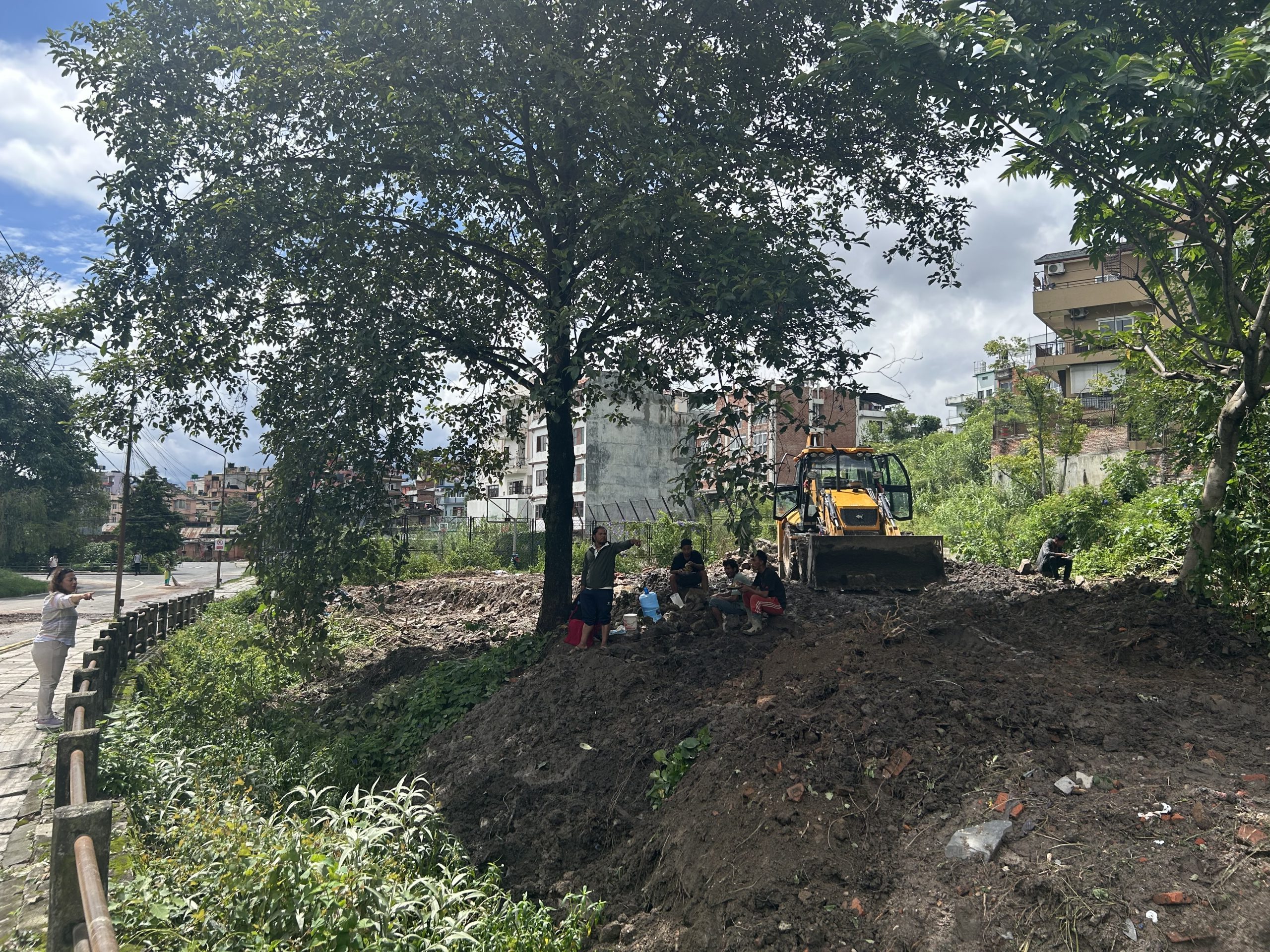
Lily Katuwal KC, left, offering timely guidance to the Pulchowk Campus workforce