
We are really pleased to share with you that The Jean Sainsbury Animal Welfare Trust has awarded us a magnificent grant of £10,000 towards the training of snake rescuers, thereby conserving snakes and mitigating snakebite mortality.
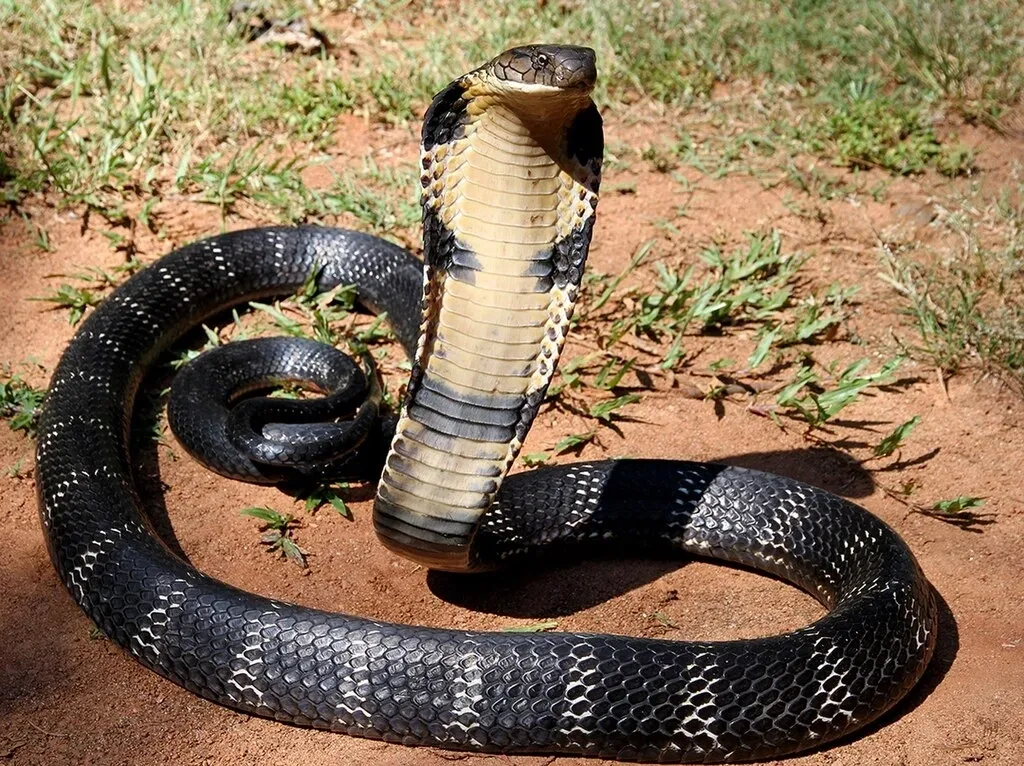
The backstory is that Nepal is home to 88 species of snakes, 12 of these venomous. Of these 46 are to be found in our operational area of Madhesh Province, south Nepal, and seven of these are venomous. The venomous snakes include the King Cobra, Spectacled Cobra, Common Krait and Russell’s Viper.
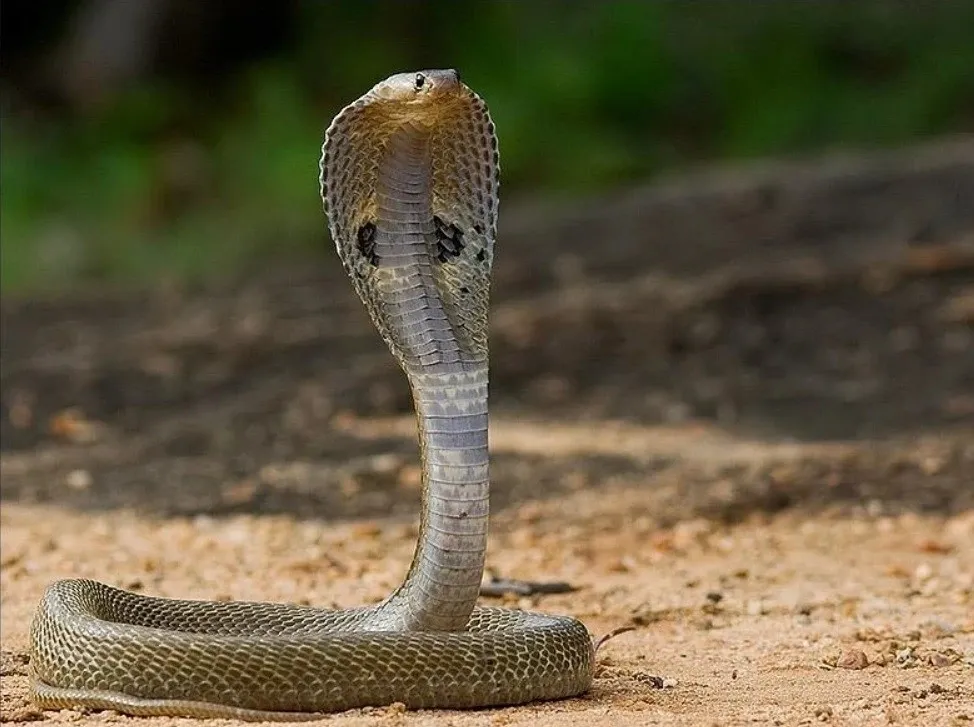
The Spectacled Cobra - Dev says it's a fairly calm snake to rescue
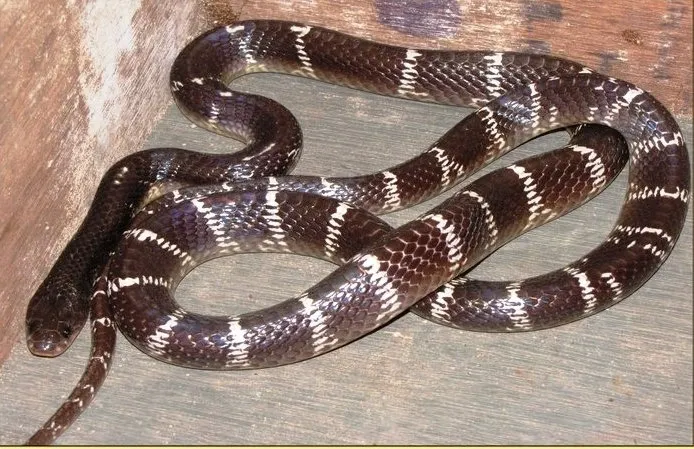
The Common Krait - Dev says it's a very dangerous snake to rescue as it moves around a lot rather than being a stationary target
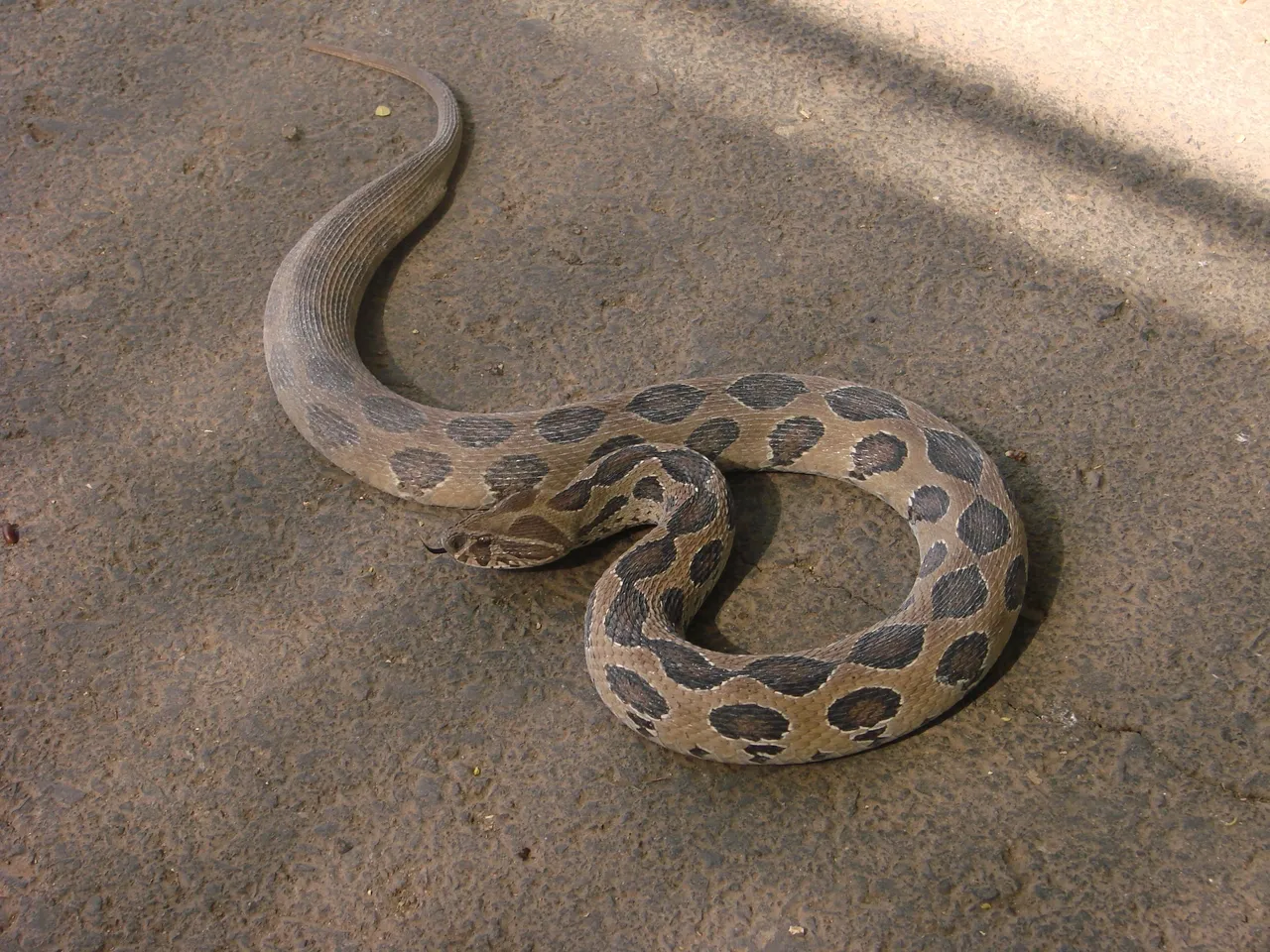
The Russell's Viper - the most dangerous of all the snakes to rescue with its capacity to jump two feet and its vicious toxic bite
The prevalence and distribution of snakes is changing quite rapidly in south Nepal. King Cobras tend to live in forests, venturing from their burrows every couple of days to feed on other smaller snakes, principally Spectacled Cobras (they can detect these within a 300m radius). However, because of recent wildfires the number of King Cobras has dropped and as a consequence there has been an uptick in the number of smaller venomous snakes in the areas that surround the forests (and by extension a greater risk of snakebites in the adjacent villages). Notwithstanding this fluctuation, the overall numbers of snakes has dropped in south Nepal as they don’t cope well with the soaring temperatures associated with climate change. Indeed, we are now seeing a northwards migration of venomous snakes from India into south Nepal (including the highly dangerous Russell’s Viper) and a further migration from the southern plains (the Terai) into the cooler hill regions. Snakes need our support rather than hostility.
That hostility of course extends from deeply-held phobias that extend to all snakes, whether they are venomous or not. In fact, people are poor at distinguishing the various types of snake and the default response to a snake straying into a village area is to kill it. Harmless snakes are being killed needlessly – the same snakes that provide a valuable service in rodent control. Within every village area – in a land where the snake is worshipped as a Hindu deity – two or three individuals are designated as ‘snake-killers’ for this purpose.
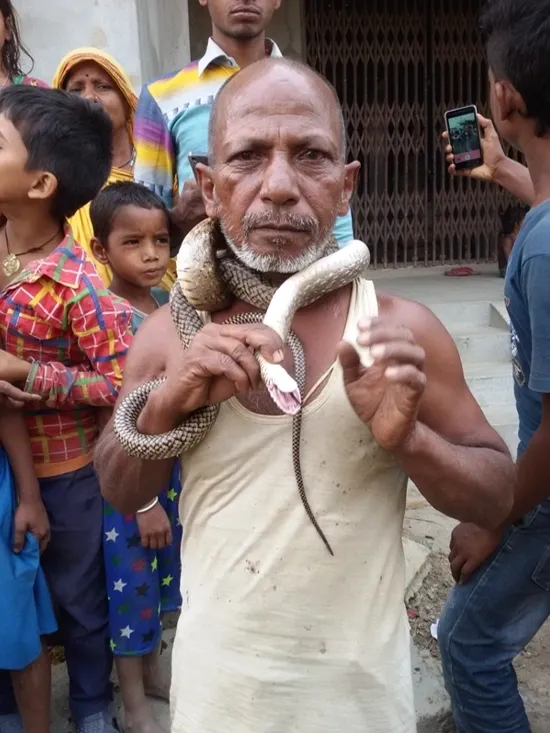
A village snake-killer
Of course, the risk of snakebite has to be taken seriously. Last year, official figures indicate that there were eight deaths from snakebite within Madhesh Province. This number is grossly understated, with the true figure closer to 97. That’s because these figures reflect only deaths in care centres and hospitals; many victims never make it that far. And a significant cause of death following bites is heart attack that may not be linked to a bite. A victim will seek help either informally through a village ‘faith healer’ or through attending a proper medical facility. The former offers no benefit whatsoever, with the wound being cut open, tourniquets and a stone that purports to have magical healing properties applied to the wound site. Worse still, going to a faith healer causes time to be lost that can be fatal. For if someone receives the anti-venom within ‘The Golden Hour’ after being bitten they will most likely survive. Beyond that hour, they are likely to die.
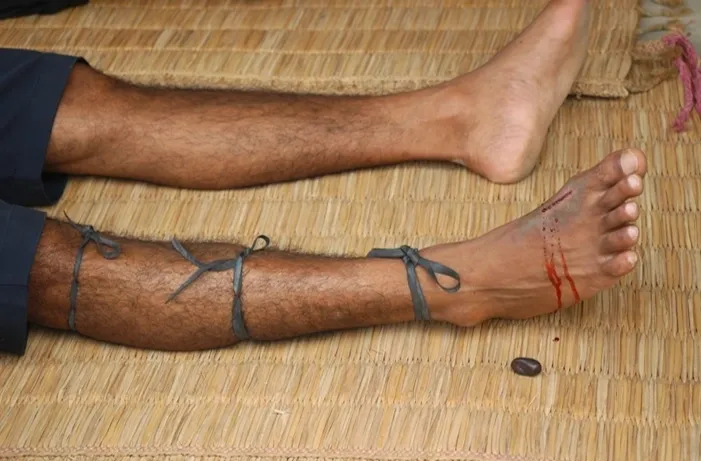
Incision, tourniquet and magic stone, as provided by a faith healer
But even medical management of snakebite leaves a great deal to be desired. Sadly, the anti-venom can only be administered at government centres and there are only seven of these in Madhesh Province. In what appears to be a case of gross discrimination against the people of the south, 82% of bites happen in south Nepal, yet 84% of facilities are located in north Nepal. Moreover, medical staff are equally bad at identifying snakebites that are genuinely hazardous. Administration of anti-venom without being clinically indicated carries the risk of serious side effects, including death.
Nepal’s leading snake expert is none other than Dev Narayan Mandal, the Founder of our partner NGO Mithila Wildlife Trust. Dev learned his skills while working with SOS Animal Rescue in India before his return to Nepal in 2013. Over the years, he has rescued 97 King Cobras – the bite from one of these can kill within ten minutes leaving no opportunity for anti-venom to work its magic. He does display one snakebite scar however – one that he allowed a Wolf Snake to inflict upon himself to prove to a sceptical doctor that not all snakebites are fatal! Dev describes snakes as being his first passion (within wildlife management!) and his knowledge of the subject is encyclopaedic, as he demonstrated for us on our latest visit to Nepal (our new Trustee Julian Bates was taking copious notes for this blog post).
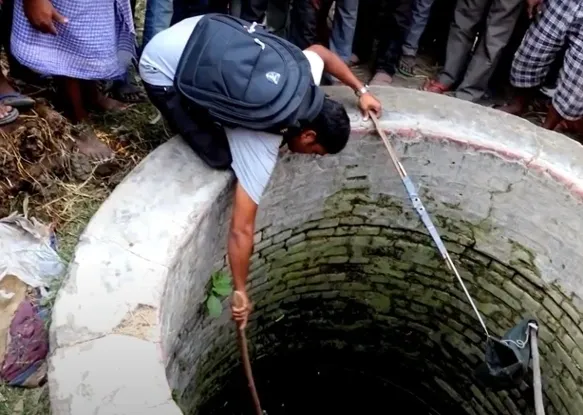
Dev rescuing snakes from a well
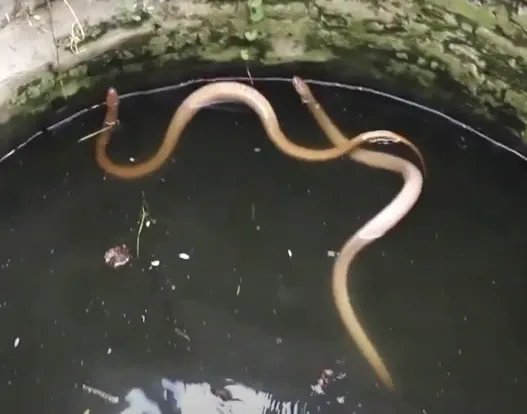
The two male cobras that Dev rescued. They had been fighting over a female while on the edge of the well. There's a lesson there somewhere.
This grant will allow Dev and his staff to train 30 snake rescuers who will offer better coverage across Dhanusha District, one of eight Districts within Madhesh Province. This will be sustainable as the training will involve teaching those who are already designated ‘snake-killers’ on how to identify and handle snakes safely (rather than killing them), before returning them to the jungle. The training will be open to men and women and result in human lives being saved, including of the rescuers themselves. Each year a significant number of aspiring rescuers die, especially from Russell Vipers which can jump two feet in the attack to inflict a bite that is fatal from the intense pain as much as from the effect of venom.
We will have an ongoing need to provide trainers with equipment and protective clothing and, in due course, to roll our training out to the other seven Districts within Madhesh Province. The training will be supplemented by the design and printing of posters that can be displayed in care centres and in schools. Each snake rescue attracts a large number of curious onlookers and this provides a tremendous teaching opportunity for the trained rescuer to share critical life-saving information about The Golden Hour and the need to seek proper medical care.
On the face of it, this project may seem to be a digression from our usual activities however this is far from being the case. Our core aim is to respond to crisis in Nepal and to the three global crises that are impacting so severely upon the country and its most vulnerable people. These are climate change, the loss of biodiversity and soaring poverty/inequality. Our response is three-fold i.e. conservation, lives and livelihoods. The conservation aspects of this project are self-evident as we protect snakes that are increasingly endangered. The lives element includes health and, in this case, saving lives that can be lost through this aspect of human-wildlife-conflict (HWC).
We are grateful to the Jean Sainsbury Animal Welfare Trust for granting us this opportunity to make an impact on this dreadful issue and to save lives of humans and snakes alike.
Attributions:
King Cobra image: By Michael Allen Smith from Seattle, USA – 12 – The Mystical King Cobra and Coffee Forests, CC BY-SA 2.0,
https://commons.wikimedia.org/w/index.php?curid=25482569
Common Krait image: By Jayendra Chiplunkar – Own work, CC BY-SA 3.0,
https://commons.wikimedia.org/w/index.php?curid=17650765
Russell Viper image: By AChawla – Own work, CC BY-SA 3.0,
https://commons.wikimedia.org/w/index.php?curid=9778967



