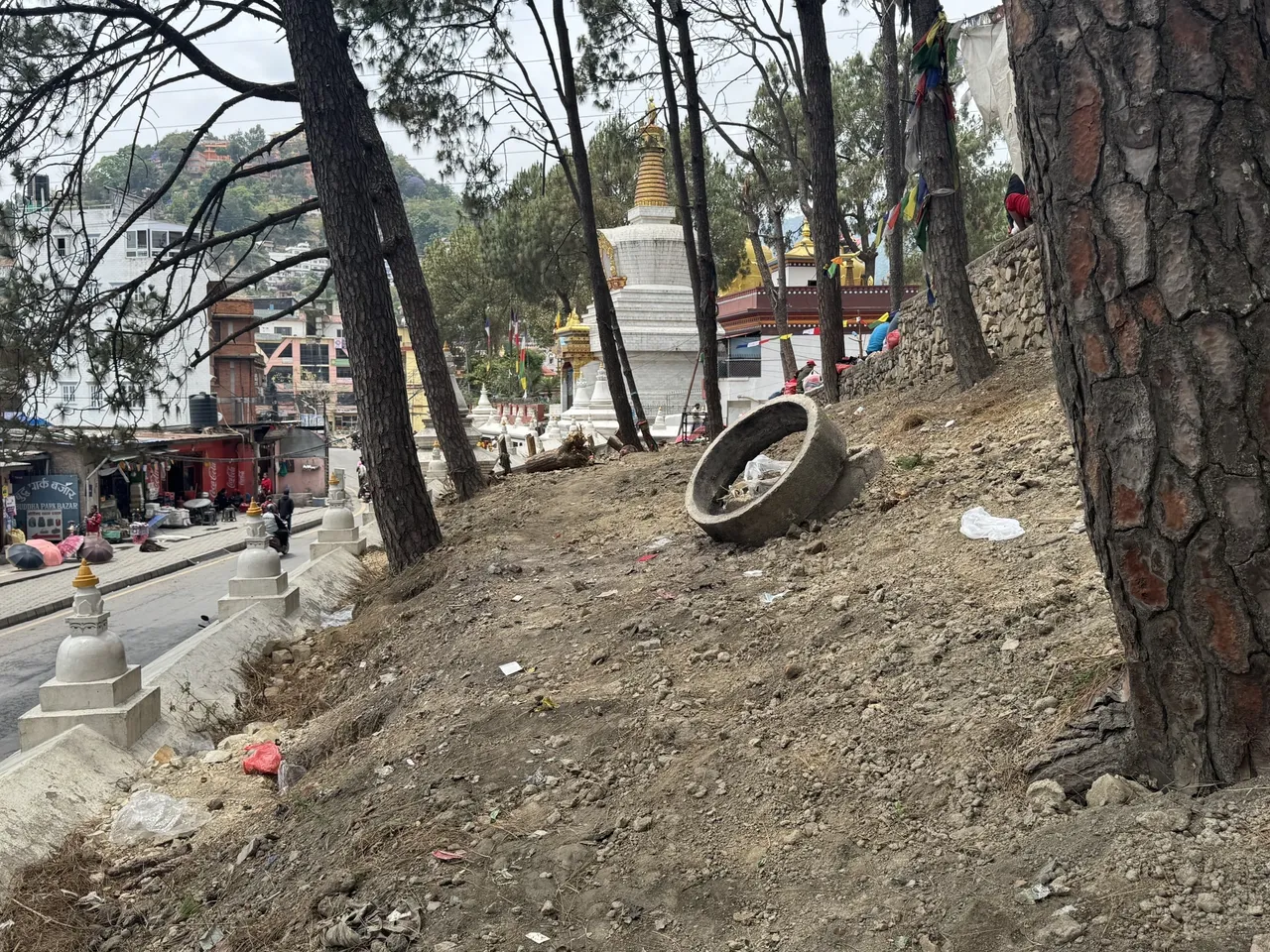
Swayambhu, often called Swayambhunath or ‘The Monkey Temple’, is a sacred hilltop overlooking Kathmandu valley that is known for its iconic stupa and deep religious importance. This world heritage site attracts many domestic and international tourists in search of the spiritual and the sublime. The site’s name in Nepali (meaning ‘self-arisen’) arises from the legend that a lotus flower miraculously bloomed here when the Kathmandu Valley was a vast lake. Over time, the lotus hill solidified, becoming Swayambhu. Its name in the Tibetan language means ‘Sublime Trees’, derived from how in the past it was known for its incredible forests and their associated biodiversity.
Botanically, Swayambhu is remarkable for its mix of native and introduced plant species, reflecting centuries of human interaction with nature. This reflects how the hill’s natural vegetation has long been tended by monks and local communities, who plant trees as acts of merit. The hill was once covered with broadleaf forest including various species of fig like Ficus religiosa (our very own Pipal Tree), considered sacred in both Hinduism and Buddhism. These trees not only stabilise the hill’s fragile slopes but also provide vital habitats for birds, monkeys, and insects. Unfortunately, over the last three decades non-native pine trees have become dominant to the detriment of soil health and biodiversity.
Early attention to the site’s plants came largely from foreign naturalists and explorers in the 19th and early 20th centuries, who documented the Kathmandu Valley’s flora in passing. However, Swayambhu itself, being primarily a religious site, was often overshadowed by broader regional surveys. It wasn’t until the late 20th century that local botanists and conservationists began focusing more closely on Swayambhu’s unique plant life. Researchers from Tribhuvan University and the Department of Plant Resources in Nepal conducted surveys, noting the mixture of native broadleaf species and introduced ornamentals planted by monks and pilgrims over centuries.
More recently, conservation groups have turned their attention to the challenges posed by invasive species, pollution, and urban sprawl. Community-led reforestation and restoration projects have begun, blending scientific research with local stewardship. And our social enterprise partner Lily’s Leaves is now at the forefront of that regeneration.
The challenges are enormous and varied.
Any casual visitor will be struck by the amount of rubbish lying around; this sacred site is no more immune to littering from the many visitors than any other open spaces in Kathmandu valley. The introduced pine trees have shed decades’ worth of needles, turning the soil acidic. And that shallow, stony, soil doesn’t lend itself to tilling. Most challenging of all is that because this is a heritage site, vehicles and JCB excavators are not permitted. Therefore the excavation of the soil has had to be done by back-breaking pick and shovel work.
But in March this year, the indomitable Lily Katuwal KC shifted her urban regeneration focus away from the Bishnumati River (for now) to make a start at restoring the forests of Swayambhu to their former glory. She is determined to succeed where others have failed in the past, being prepared to invest time, effort and Pipal Tree funding in getting a result to be proud of. And she is doing so with the keen support of the local community – this community buy-in was not necessarily so self-evident at the Bishnumati area. It is refreshing for Lily to enjoy such support rather than to feel the rivalry of others who prefer to turn open spaces into car parks!
A key ally for Lily is Dr Keshab Shrestha, a former Professor at The Natural History Museum in Kathmandu a member of the Swayambhu Management and Conservation Federation. He has been involved in environmental projects at Swayambhu for many years – projects that have always struggled through a shortage of funds rather than any lack of passion. Keshab has been very influential in securing a five-year Memorandum of Understanding between the Swayambhu Management and Conservation Federation and Lily’s Leaves that will allow her potentially a huge area to restore as funds come available.
The Phase 1 reforestation project covers a land area of approximately 1,000 – 1,100 square metres. There are no quick fixes as the soil has to be tested, cleaned of litter, loosened, topsoil and manure incorporated and the area fenced off. Also, there is a need to address the severe soil erosion that has happened with the building of terrace walls and soil replacement.
In Phase 1, Lily is aiming to plant 4,000 saplings from over 50 native broadleaf species. These include fruit and nut species that are vitally important to wildlife, including the numerous monkeys from which the site derives its name. Currently the monkeys are often snacking on junk food that’s offered to them by well-intentioned tourists, to the detriment of simian health. Many of the monkeys are suffering from alopecia and a future diet derived from trees will help address their illnesses.
As per at the Bishnumati River plantation sites, Lily has planned to use the ‘Miyawaki’ rapid-growth reforestation method that we have been pioneering in Nepal since December 2021. However, it quickly became apparent that conducting the essential excavation to a depth of one metre by hand would take a huge amount of time and as a consequence be prohibitively expensive. This is one reason why previous attempts at applying the Miyawaki Method to this location have failed; there are no shortcuts with this Method. But we’ll get there!
The pictures below – in no particular order – give a flavour of the hard work in progress at Swayambhu. We look forward to sharing images of those saplings being planted out in a landsite where they truly belong.
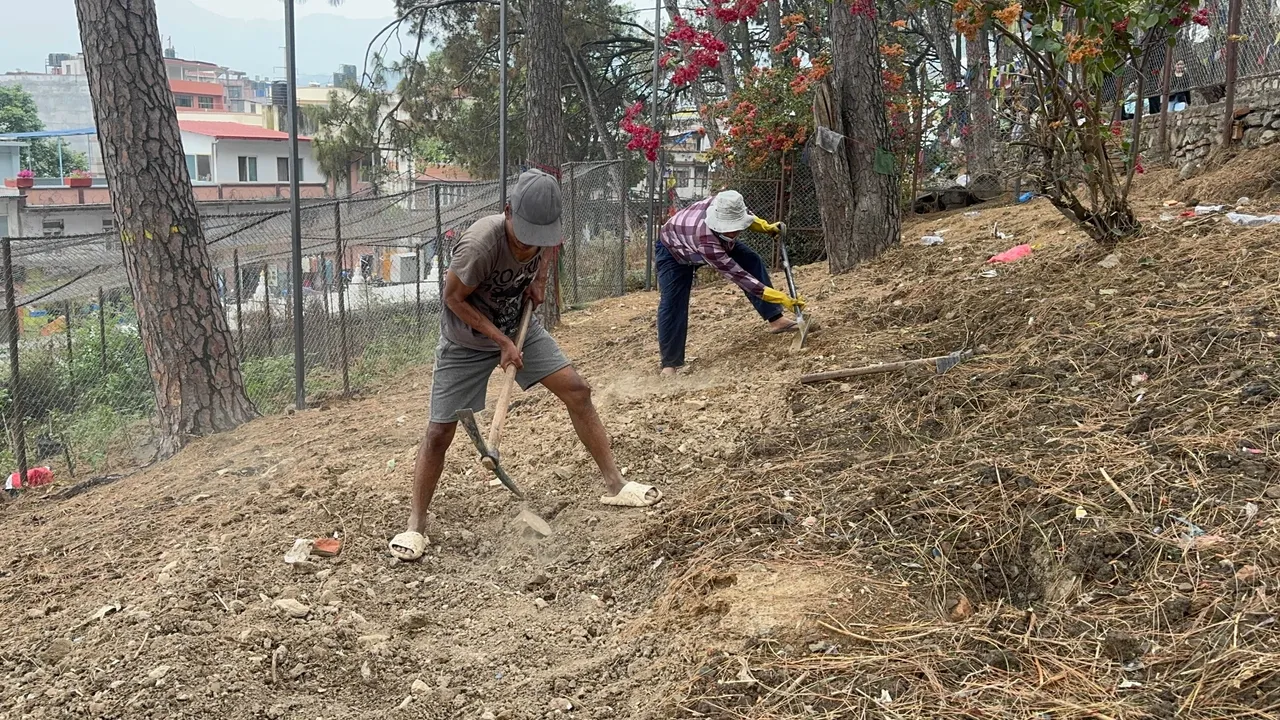
Picks, shovels and pine needles
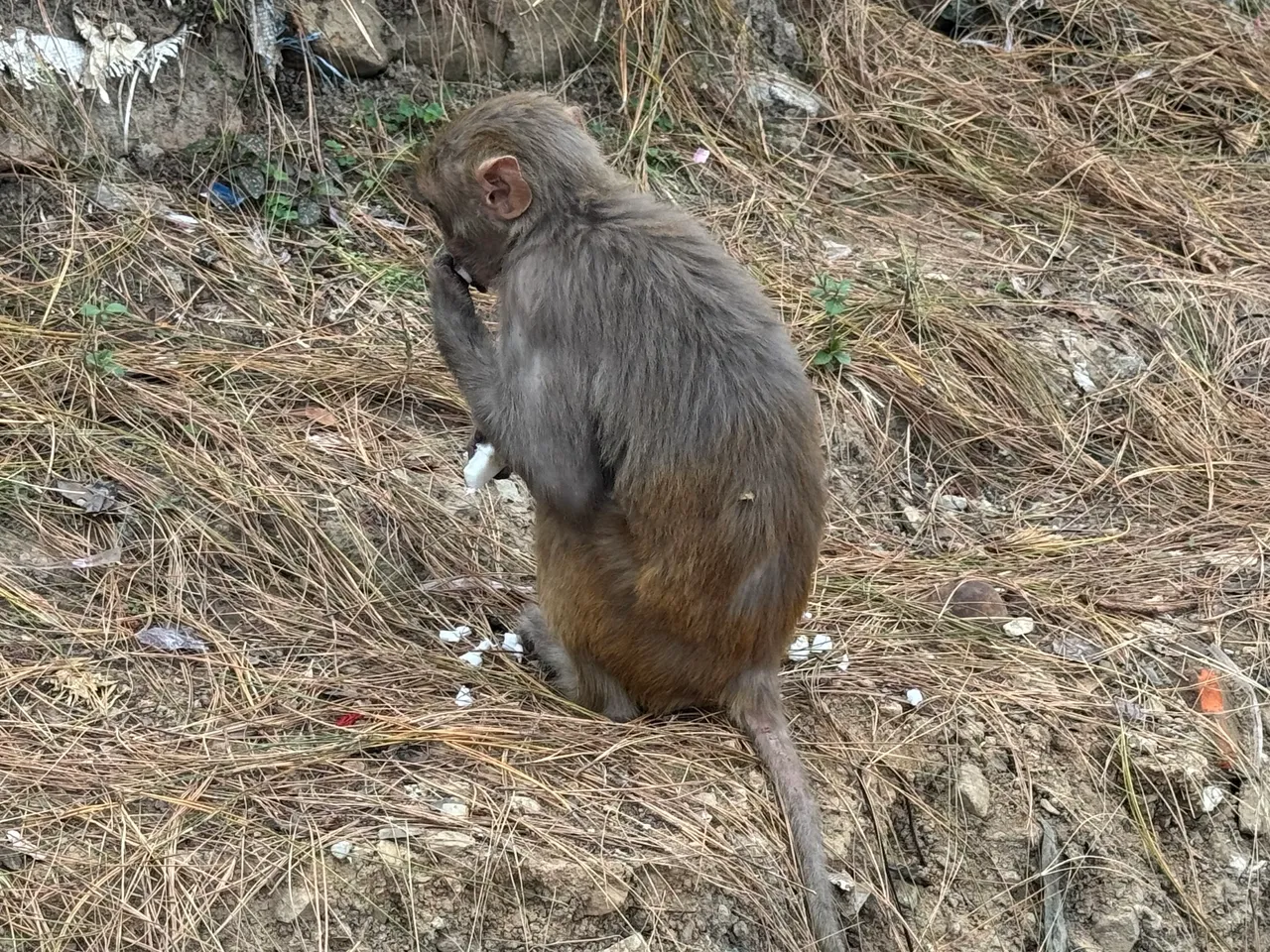
An Assamese Monkey eating junk food
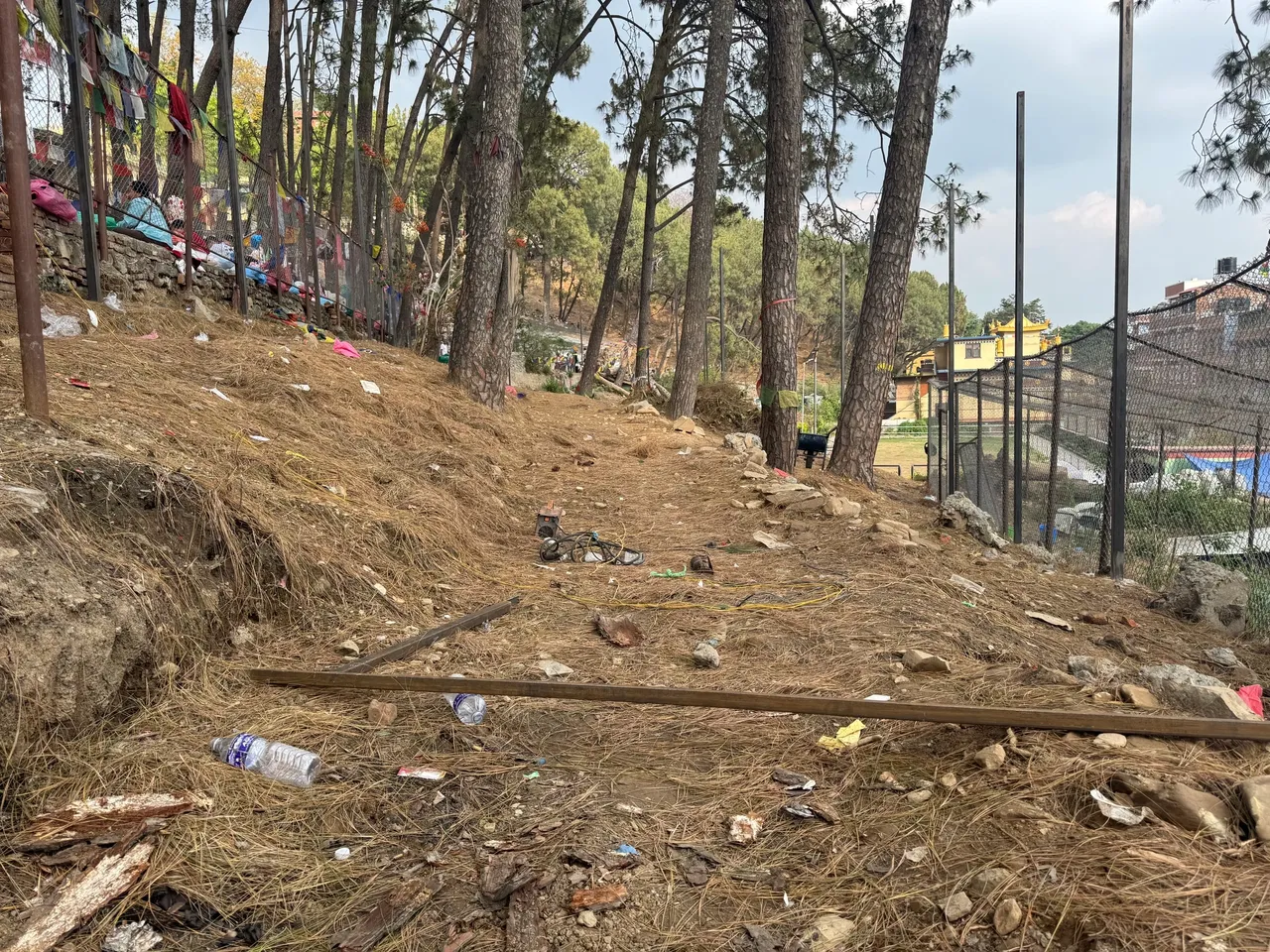
Litter amongst the pine needles - in future there will be litter bins to reduce the risk of recurrence
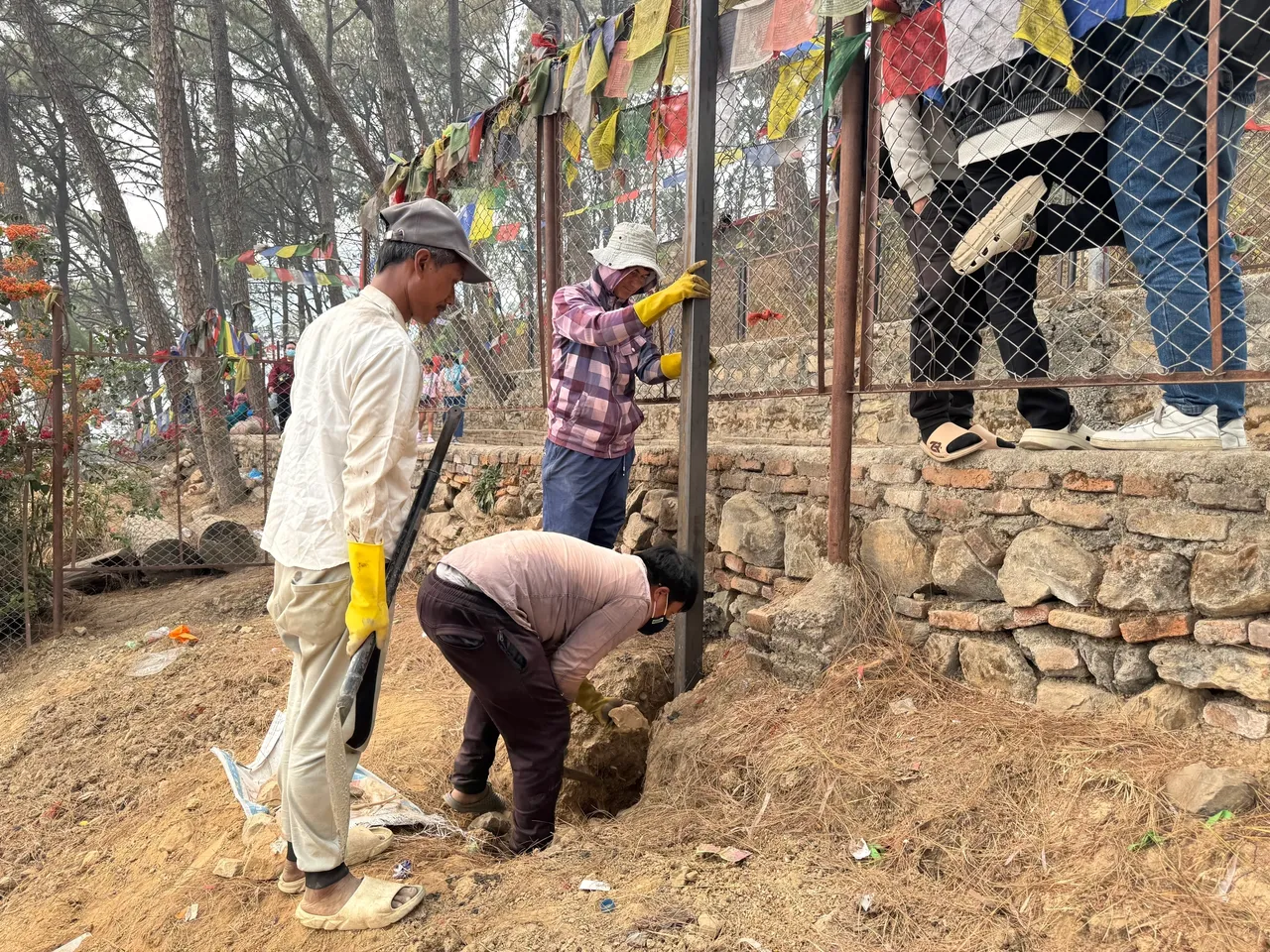
It's the same the world over - installing a fence post is a three-man-job
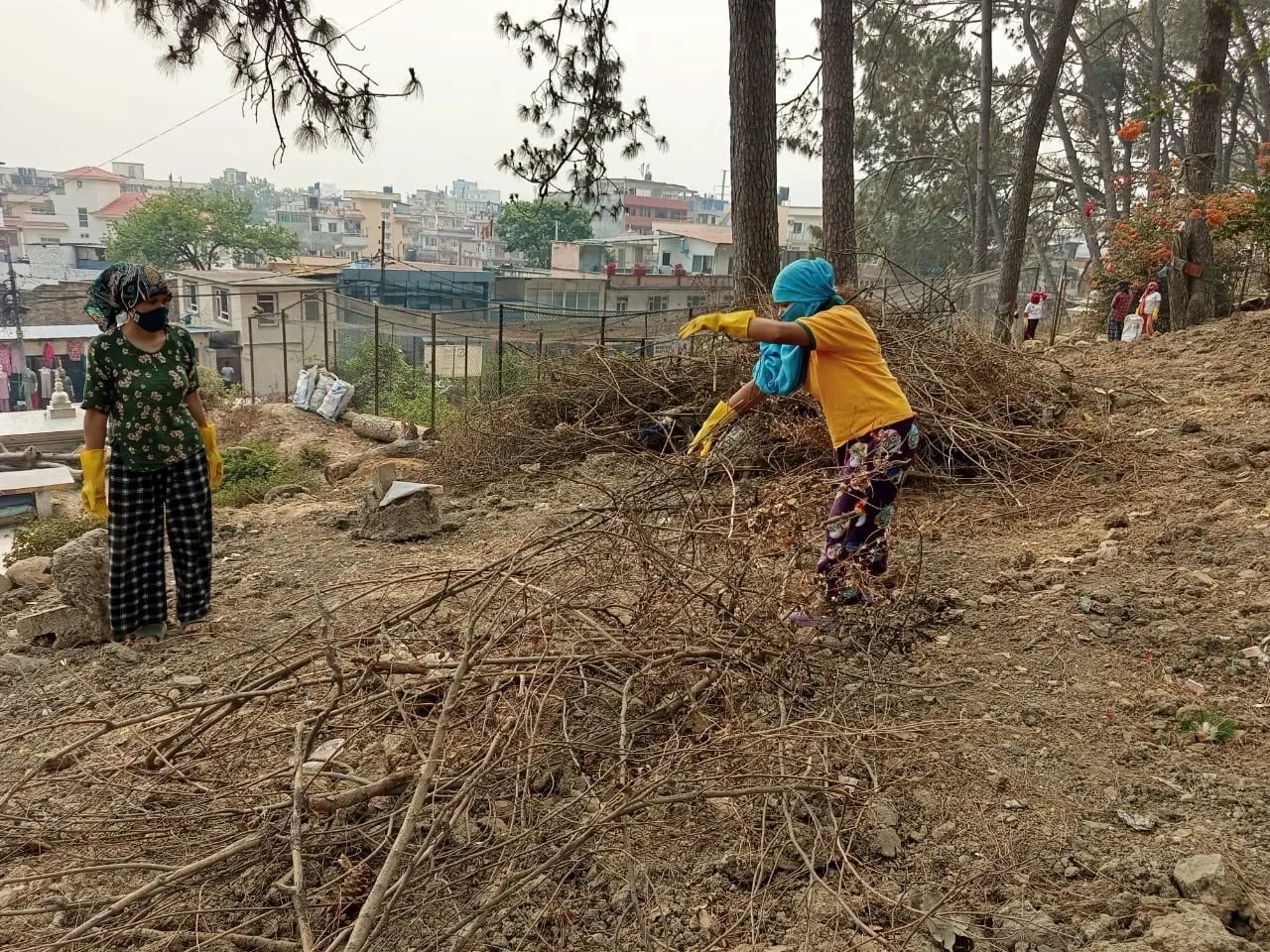
The disabled young women at Lily's Leaves are a central part of the workforce
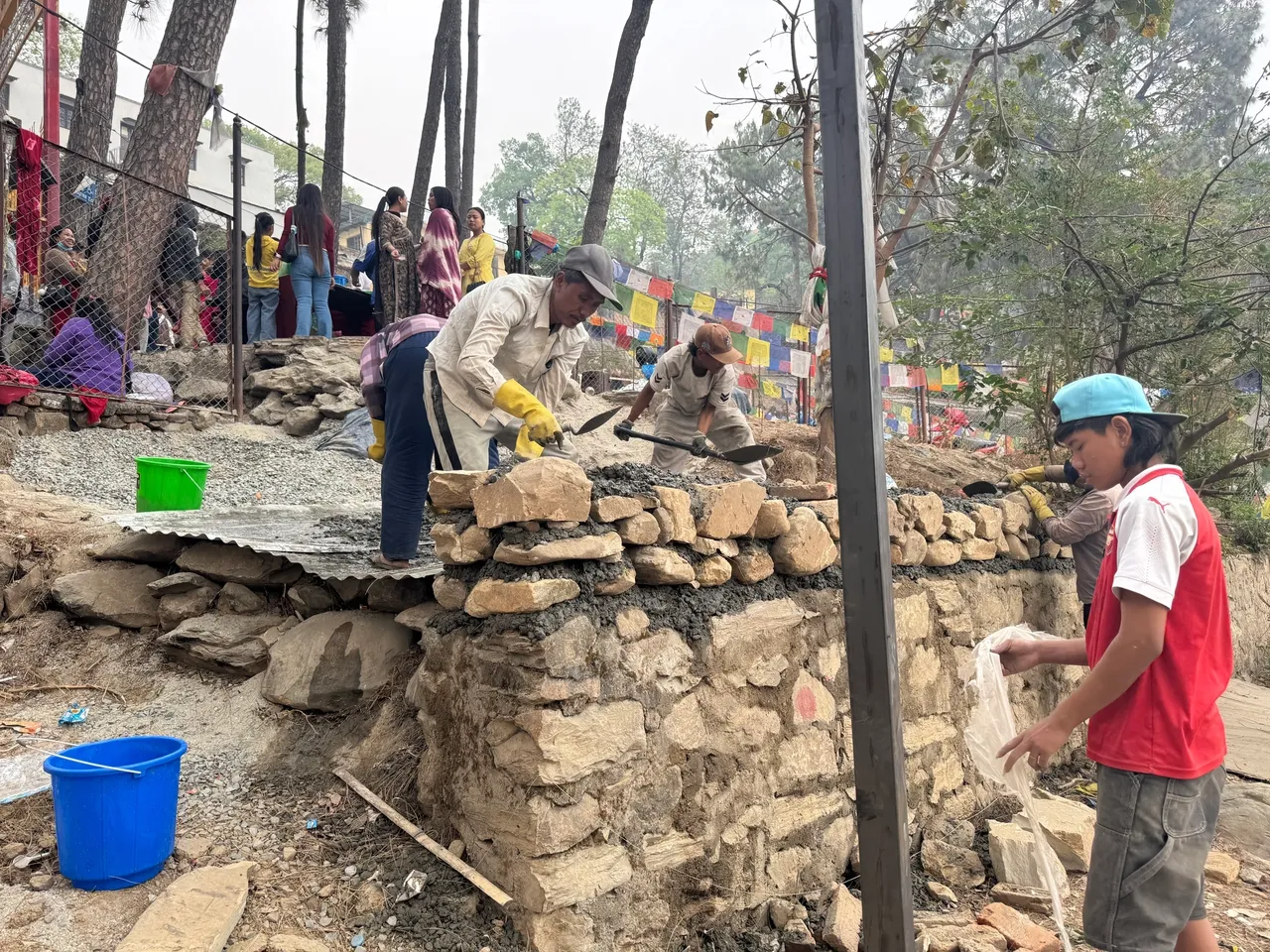
Building terrace walls amongst the Buddhist prayer flags
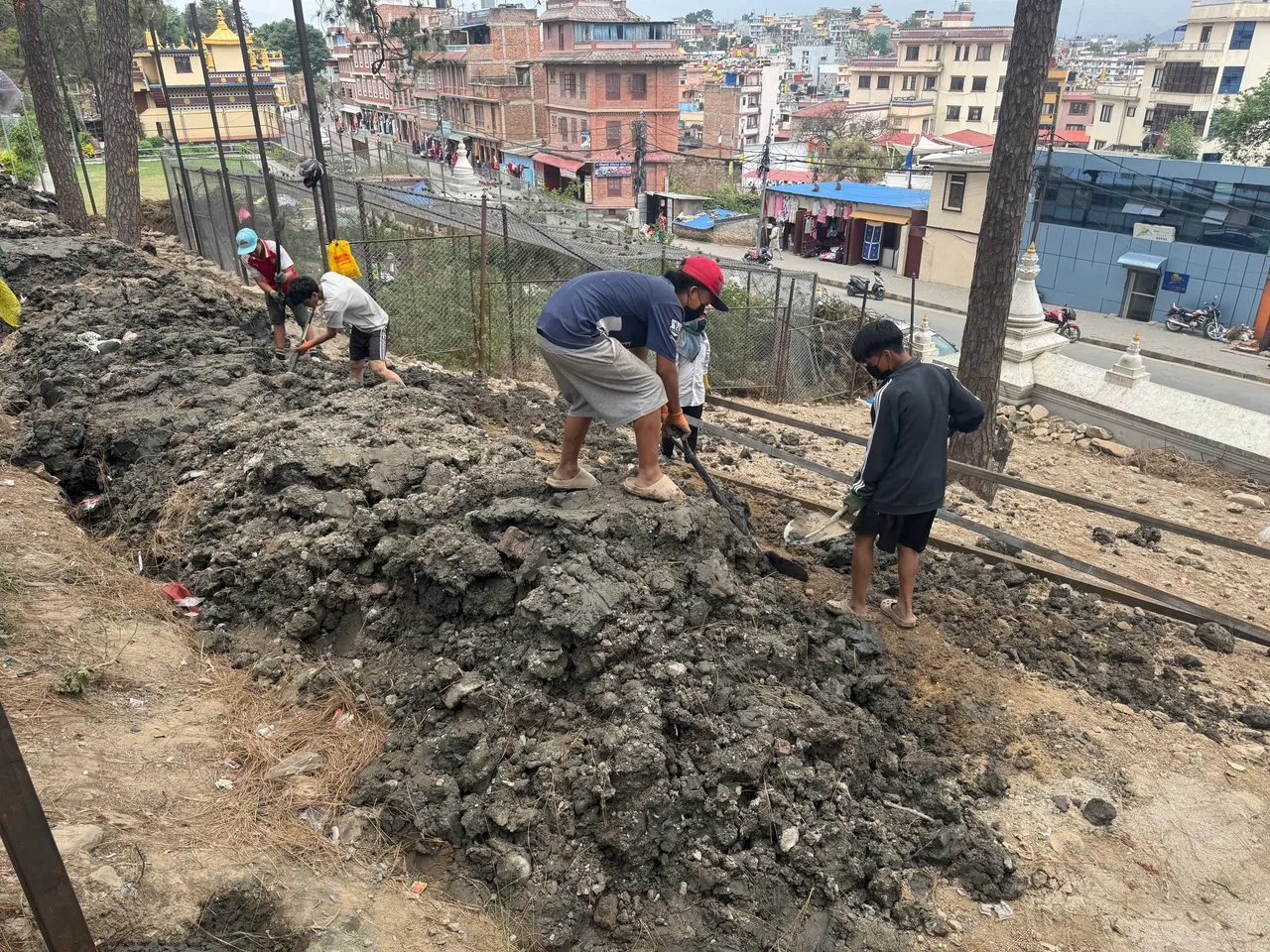
Spreading a delivery of topsoil to address soil erosion
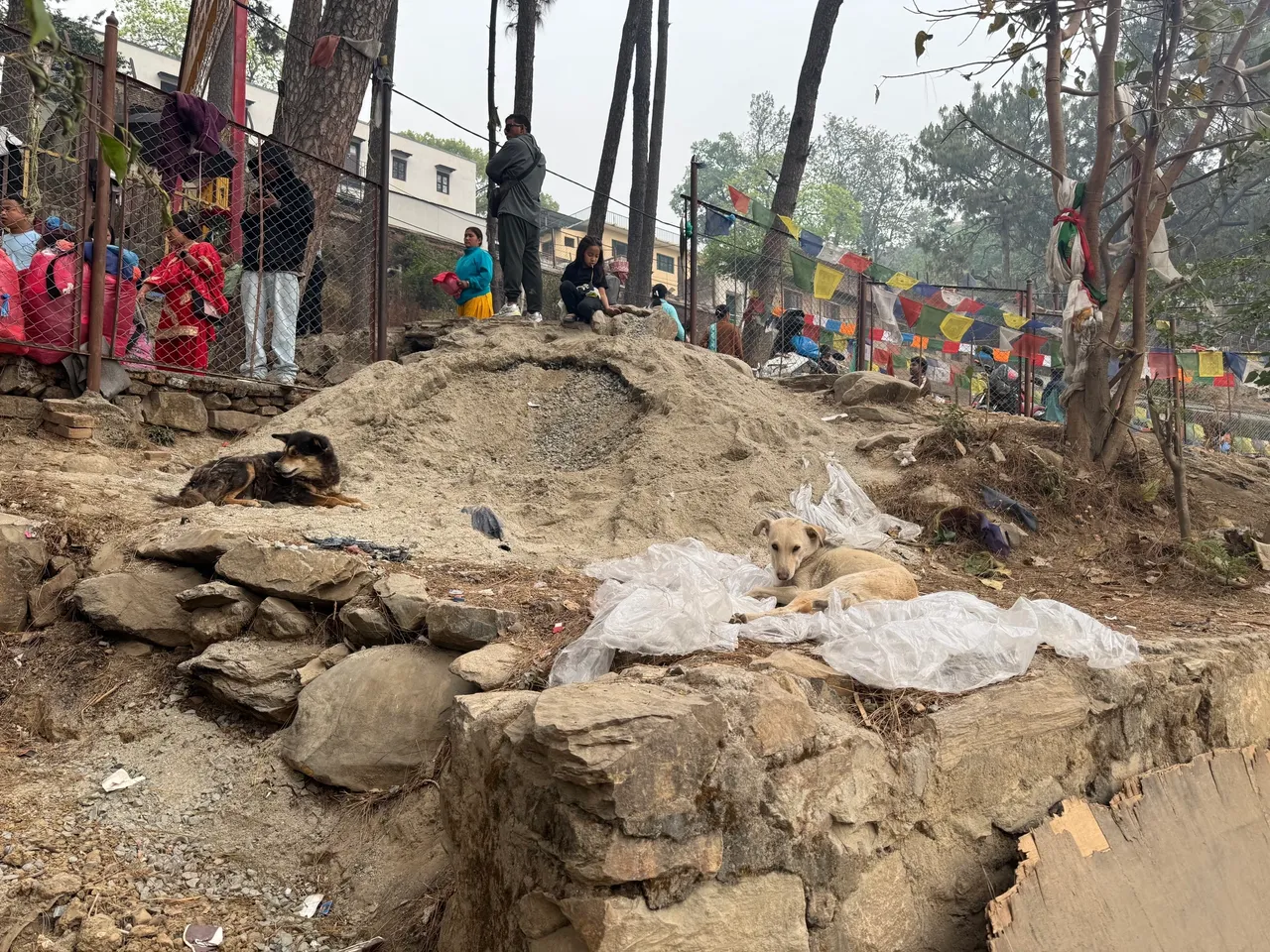
The obligatory Kathmandu street dogs supervising the workers
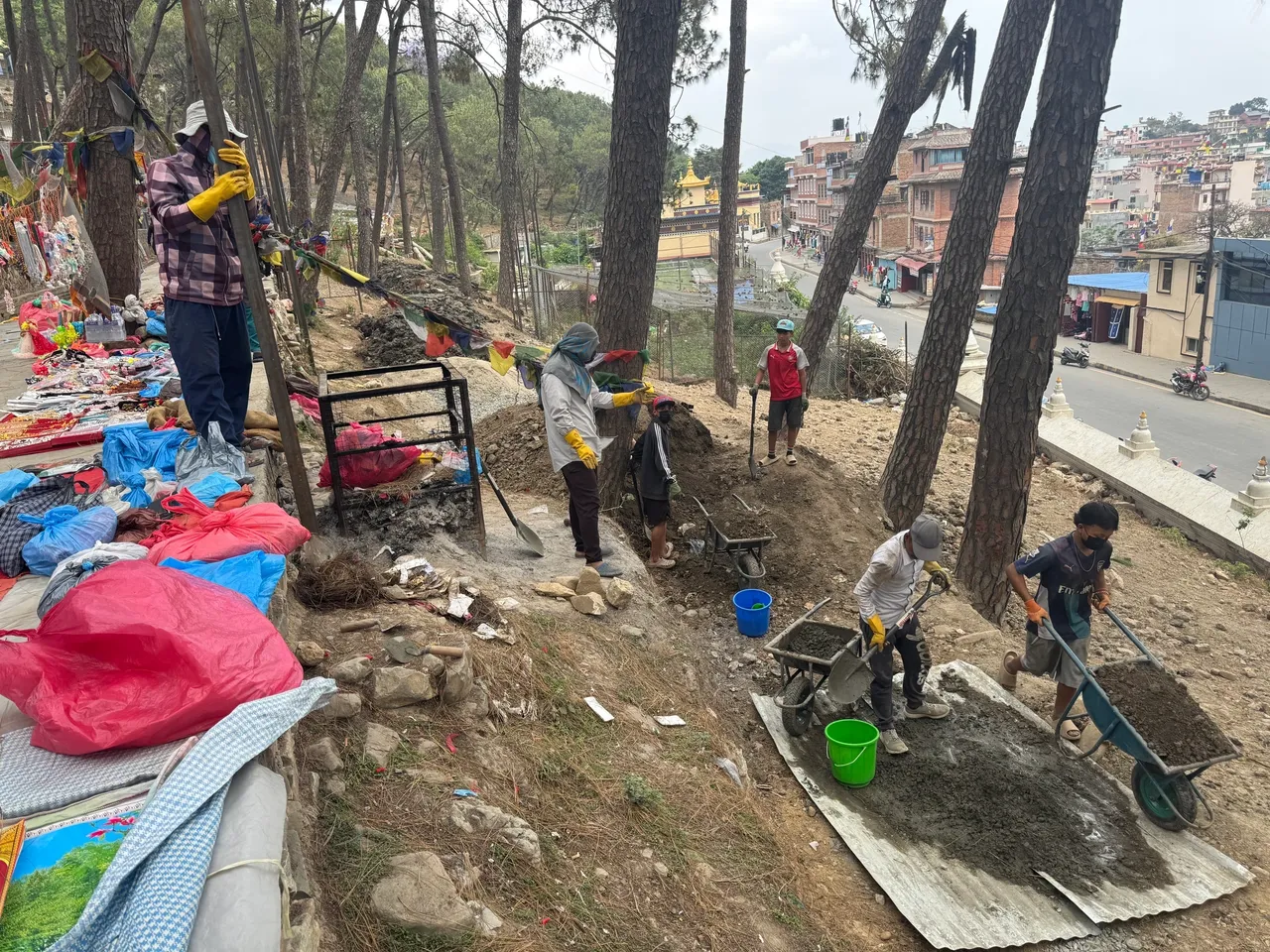
A hive of activity - the hills may appear wooded already, they're just the wrong trees....
As a footnote, this is one project that is being funded by The Big Give Green Match Fund appeal that ended so successfully in the past week.